
Writer
Astronautix Staff
Articles
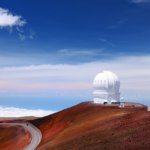 Sky & EarthMauna Kea in Hawaii stands taller than Everest when measured from its base on the ocean floor, and its summit sits above about 40 percent of Earth’s atmosphere, which is why more than a dozen of the world’s great telescopes are crowded onto its peak
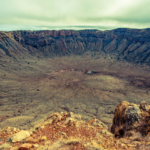 Sky & EarthBefore they flew to the Moon, Apollo astronauts trained inside Meteor Crater in Arizona, a hole nearly a mile wide blasted out by an iron asteroid about 50,000 years ago, because its shattered rock was the closest thing on Earth to the surface they were about to walk on
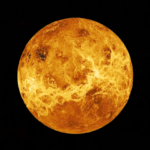 ExplorationIn 1975 a Soviet lander sent home the first photograph ever taken on the surface of another planet, a grainy black-and-white view of flat rocks on Venus, and it lasted 53 minutes in heat greater than a pizza oven’s before it fell silent
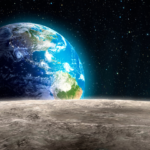 Sky & EarthMany astronauts come home describing the same shift in how they see Earth — and even those who were told to expect it say the actual feeling caught them off guard
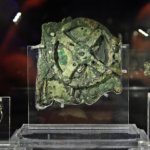 Sky & EarthSponge divers sheltering from a storm in 1900 stumbled onto an ancient shipwreck, and inside it was a shoebox-sized bronze device with dozens of gears that could predict eclipses decades in advance
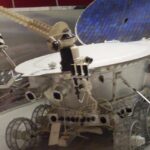 ExplorationIn November 1970, the Soviet Union landed a remote-controlled rover on the Moon that drove 10.5 km over 10 months, steered by a five-man crew watching still images that arrived every few seconds
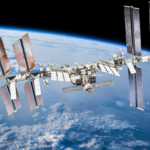 Sky & EarthThe most remote spot in the ocean is so far from land that the closest humans are often the astronauts passing overhead on the International Space Station, and it is where space agencies deliberately send old spacecraft to sink, including Russia’s entire Mir space station
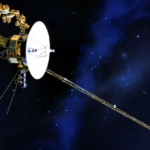 ExplorationWhen Voyager 1 left Earth in 1977, a phone was something attached to the kitchen wall, and this week, still running on its original 1970s computers, it becomes the first object humans have ever built to travel a full light-day from home
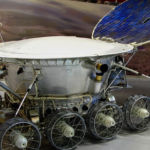 ExplorationThe Soviet Lunokhod 1 rover went silent on the Moon in 1971, then scientists found its lost reflector in 2010 and got a signal bright enough to reopen a forgotten corner of lunar science
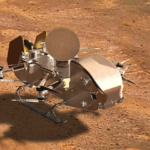 ExplorationTitan’s air is four times thicker than ours and its gravity a seventh as strong, which means a human being there could in principle fly under their own muscle power — strap on wings, run a few paces, and flap