
Writer
Astronautix Staff
Articles
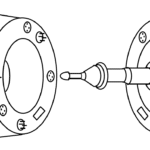 ExplorationJust 62 minutes after Kosmos 188 launched on 30 October 1967 it docked with Kosmos 186, the first automatic docking in space, though the unmanned Soyuz craft sat about 85 millimetres apart so no electrical connection could be made
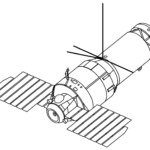 ExplorationThe Soviet station launched on 25 June 1974 as Salyut-3 was in reality the military Almaz laboratory, OPS-2, and on 24 January 1975, after its only crew had gone home, ground controllers remotely fired its self-defense gun before it was deorbited
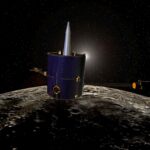 ExplorationNASA crashed Lunar Prospector into a shadowed crater near the Moon's south pole on 31 July 1999, carrying one ounce of Eugene Shoemaker's ashes in a polycarbonate capsule wrapped in brass foil inscribed with Comet Hale-Bopp and Meteor Crater
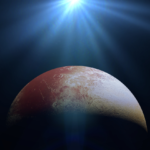 Sky & EarthIn 1930 a 24-year-old farm boy from Kansas, hired by an observatory in Flagstaff, Arizona after he mailed in drawings of Jupiter and Mars made with telescopes he built himself, discovered Pluto by flipping back and forth between two photographs of the same patch of sky
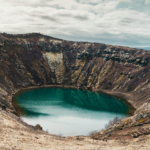 Sky & EarthIn 1965 and 1967 NASA flew groups of future Apollo astronauts, Neil Armstrong among them, to the lava fields and volcanic craters of northern Iceland, because its barren, ash-covered landscape was the closest thing on Earth to the ground they hoped to walk on the Moon
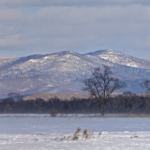 Sky & EarthOn a February morning in 1947, a fireball brighter than the Sun tore across the sky over Russia’s Sikhote-Alin mountains and burst apart, showering the snowy forest with iron, and searchers have since pulled more than 23 tons of it out of over 100 craters
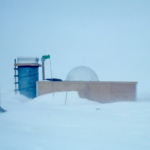 Sky & EarthAt Concordia station on the Antarctic plateau, about a dozen people spend each winter completely cut off, with no flights in or out and roughly 100 days without the Sun rising, and the European Space Agency studies them because it is the closest thing on Earth to a trip to Mars
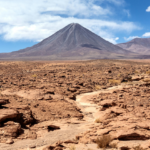 Sky & EarthParts of Chile’s Atacama Desert are so dry that NASA tests its Mars rovers there, and its soil is so lifeless that when scientists ran Viking-style life-detection experiments on it, they found almost nothing growing at all
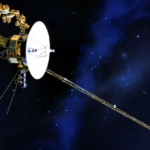 ExplorationWhen Carl Sagan’s team chose the music for Voyager’s Golden Record in 1977, they included Chuck Berry’s “Johnny B. Goode,” and when one adviser objected that rock ’n’ roll was music for adolescents, Sagan replied, “There are a lot of adolescents on the planet”
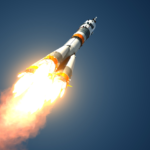 Sky & EarthEvery NASA astronaut who has flown on a Soyuz first spent months at Star City outside Moscow learning to operate the spacecraft in Russian, because every switch, checklist and radio call aboard is written and spoken in Russian