
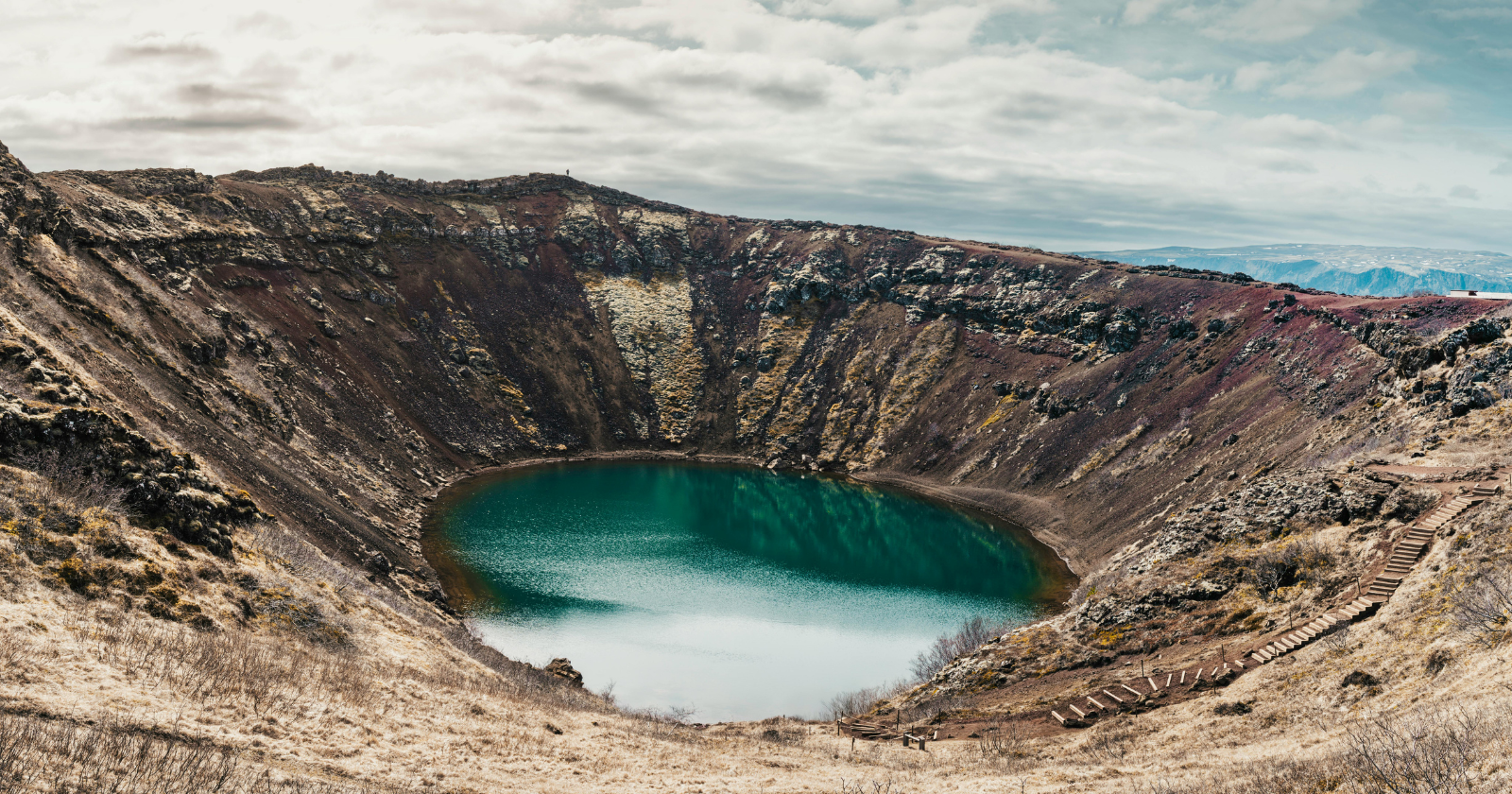
In July 1965, a group of American test pilots climbed out of a bus in the highlands of northern Iceland. Around them stretched black sand, jagged lava and grey volcanic ash, with barely a plant in sight.
They weren’t there for a holiday. They were NASA astronauts, and they had come to learn how to read rocks. Within a few years, some of them would be collecting samples on the Moon.
Turning pilots into geologists
When the Apollo programme began, most of NASA’s astronauts were military test pilots. They knew how to fly almost anything, but very few knew much about geology.
That was a problem. The Apollo missions weren’t just about landing on the Moon; they were meant to bring back rocks that could reveal its history. Astronauts would have only a few hours on the surface and needed to know which samples were worth collecting. So NASA sent them on geology field trips to places such as Arizona, Hawaii, Alaska and Iceland.
Two trips to the north
The first Iceland trip took place in July 1965. A second group arrived on 2 July 1967 and included Neil Armstrong and Bill Anders, who would later fly on Apollo 8. Altogether, 32 astronauts took part in the two expeditions.
The groups worked around Lake Mývatn and the Askja caldera, a huge volcanic crater in the remote highlands, now part of Vatnajökull National Park. Geologists showed them lava flows, volcanic ash, craters and rock formations, and taught them how to describe what they saw and pick useful samples.
A landscape that looked like another world
The Askja area is one of the most barren places in Iceland. A major eruption in 1875 covered the land with pumice and ash, and little has grown there since. To the astronauts, the grey, empty landscape felt otherworldly.
But the trips weren’t only about appearances. Iceland offered a chance to study volcanic geology up close, because the Moon’s dark plains are made of ancient lava. Learning how volcanic rocks form and change helped astronauts understand what they would find on the lunar surface. The Exploration Museum in Húsavík describes Askja as having been considered the most Moon-like of the training areas.
Life on the field trip
The astronauts camped in the highlands and travelled across rough roads by bus. They hiked over lava fields, hammered at rocks and practised describing geology out loud, as they would need to do on the Moon.
There was also time to relax. A well-known photo shows Armstrong fishing for salmon in a river near Húsavík during the 1967 trip. Local people remember the visits as a rare moment when the space race came to their quiet corner of the world.
Seven later walked on the Moon
Of the 32 astronauts who trained in Iceland, seven later walked on the Moon, including Armstrong, who became the first person to step onto its surface in July 1969. Others flew in orbit around the Moon or took part in other missions.
The training paid off. Apollo crews returned with hundreds of kilograms of carefully chosen samples, which scientists still study today. Astronauts later said the geology lessons, in Iceland and elsewhere, had helped them make better choices on the Moon.
Remembering Iceland’s role
In 2011, the Exploration Museum opened in Húsavík, with an exhibition about the Apollo training. In July 2015, on the 50th anniversary of the first trip, Armstrong’s grandchildren unveiled a monument outside the museum listing all 32 astronauts. Several surviving Apollo astronauts returned to Iceland for the occasion.
Iceland is still used to test equipment and train people for exploring other worlds. More than half a century after the Apollo crews camped in its highlands, the island’s harsh volcanic landscapes are still helping people prepare for the Moon.