
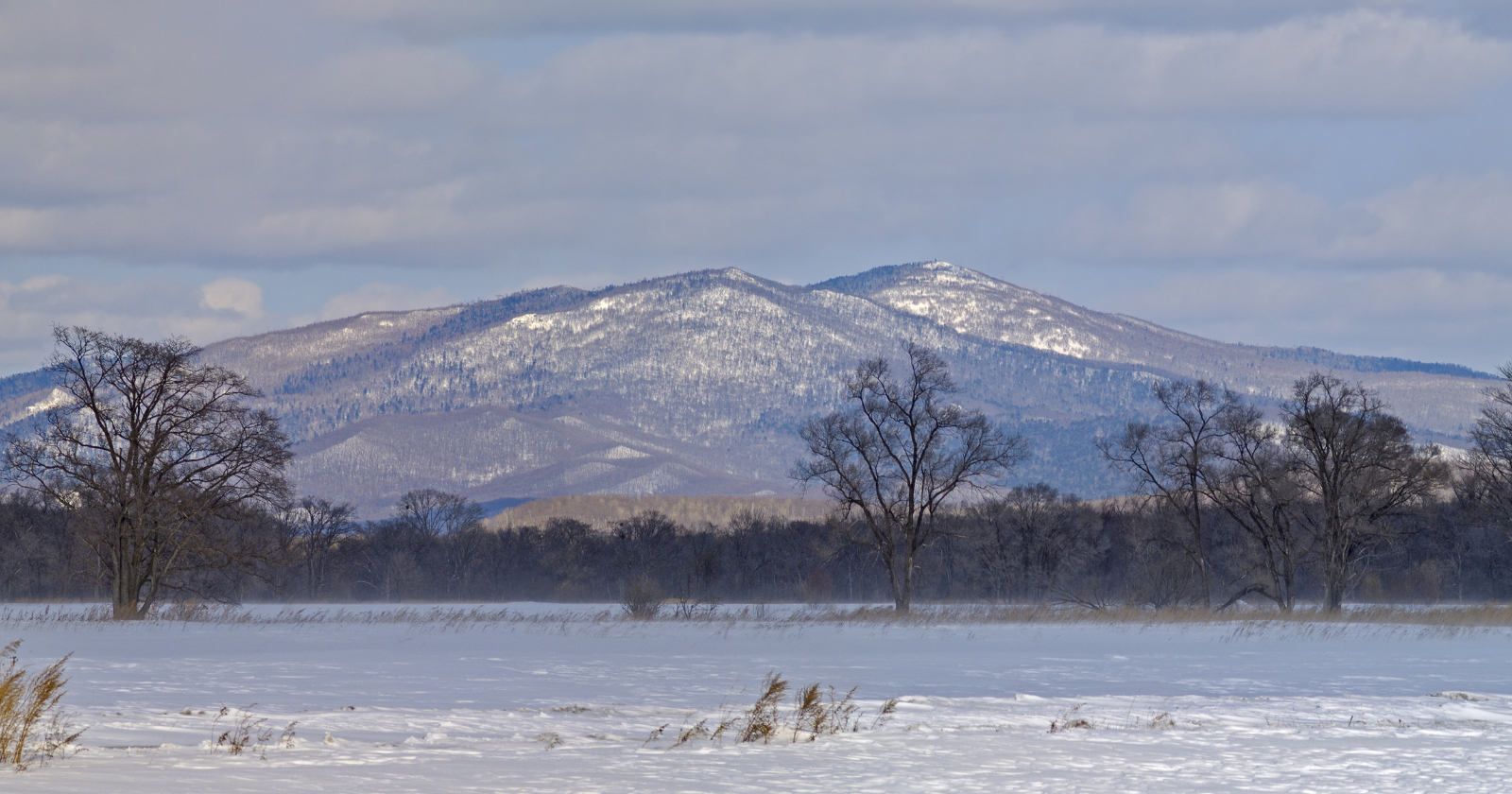
The morning of 12 February 1947 was cold and bright in Russia’s Far East. In the villages near the Sikhote-Alin mountains, north of Vladivostok, people were going about their day, and loggers were at work in the dense forest.
At about 10:35, a fireball blazed across the sky. Witnesses said it was brighter than the Sun and threw off coloured sparks as it raced overhead. Seconds later, a series of booms rolled across the valley like cannon fire, and a dark trail of smoke hung in the sky for hours.
A shower of iron
What people had seen was an iron meteoroid, a lump of metal from space, entering Earth’s atmosphere at around 14 kilometres per second. As it fell, it began to break apart under the heat and pressure.
At an altitude of about 5.6 kilometres, the largest remaining piece exploded in an air burst. Thousands of fragments rained down onto the snow-covered forest below, spread across an area of about 1.3 square kilometres.
Craters in the forest
The first geologists to reach the site, later that month, found a remarkable scene. Trees had been torn down and splintered, and the ground was pitted with holes. Some fragments had embedded themselves in tree trunks.
Over the following years, researchers mapped more than 100 craters. The largest was about 26 metres across and 6 metres deep. Many smaller pits and holes were scattered across the strewn field, where pieces of iron had punched into the frozen ground.
Recovering the meteorite
The Soviet Academy of Sciences sent expeditions to the site, led by meteorite scientists including Evgeny Krinov. Working in the harsh conditions of the forest, the teams dug out fragments and recorded where each was found.
Over many years, they recovered more than 23 tonnes of iron, and some Russian sources put the total at more than 30 tonnes. The largest single piece weighed about 1,745 kilograms and is now displayed in Moscow. Scientists estimate the meteoroid weighed around 70 to 100 tonnes before it entered the atmosphere, with much of it burning up or breaking into dust on the way down.
What it was made of
The Sikhote-Alin meteorite is mostly iron, about 93 per cent, with nearly 6 per cent nickel and small amounts of cobalt and other elements. It belongs to a group of iron meteorites thought to come from the metal cores of small asteroids that were shattered in collisions long ago.
The fragments come in two main forms. Some are smooth, rounded pieces covered in thumbprint-like dents, shaped as they melted while falling through the air. Others are jagged, twisted shards torn apart by the explosion and impact.
One of the largest falls ever seen
Large meteorites have hit Earth before, but few have been seen falling and then recovered in such quantity. The 1908 Tunguska event in Siberia was far bigger, but it left no meteorite fragments behind. Sikhote-Alin is still one of the largest witnessed meteorite falls in recorded history.
The Soviet Union marked its tenth anniversary in 1957 with a postage stamp showing a painting of the fireball. Today, small fragments are among the most popular meteorites with collectors, and pieces are sold around the world.
A reminder from space
Fortunately, the meteorite landed in a remote forest, and no one was reported hurt. Had it fallen on a town, the results could have been deadly.
The fall is a reminder that Earth still collides with debris from space. Most of it is tiny and burns up harmlessly, but every so often a larger piece survives the journey. In the snow of Sikhote-Alin, scientists got a rare chance to study one up close.