
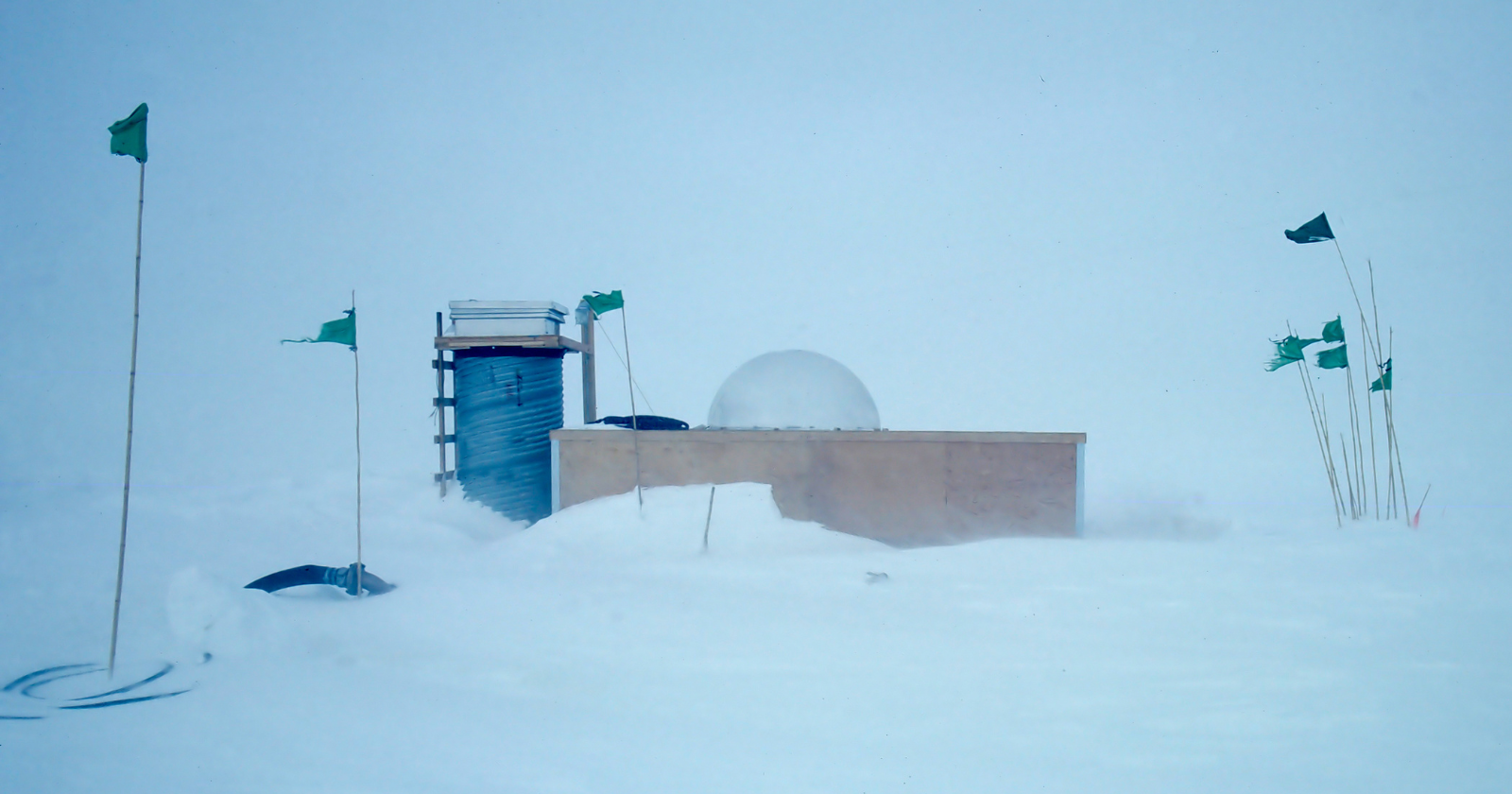
In early May, the crew at Concordia station step outside to watch the Sun slip below the horizon. They won’t see it rise again until August.
For the next few months, a dozen or so people will live in darkness and extreme cold, more than 3,000 metres up on the Antarctic ice sheet. No plane can reach them and no one can leave. The European Space Agency calls this place “White Mars”.
A station in the middle of nowhere
Concordia sits on a high, flat plateau called Dome C, deep inside East Antarctica. It’s run jointly by the French and Italian polar programmes and has operated year-round since 2005. The station stands at about 3,233 metres above sea level, around 1,100 kilometres inland from the nearest coastal base.
Its nearest neighbours are at Russia’s Vostok station, about 600 kilometres away. In winter, temperatures can fall to around –80°C, with a yearly average of about –50°C. ESA points out that, in winter, Concordia’s crew is more isolated than astronauts aboard the International Space Station, who can at least be brought home in an emergency.
Cut off for the winter
The crew arrives around November, during the Antarctic summer, when planes can fly in. Once winter sets in, around February, flights stop. From then until the following spring, the station is on its own, with no way in or out.
The darkness is the hardest part for many. In 2025, the Sun set on 4 May and didn’t return until 10 August, nearly 100 days later. Even before and after that, the Sun stays low in the sky for weeks, and ESA describes the winter as about four months of darkness.
Why it resembles a Mars mission
A crew travelling to Mars would face many of the same challenges as Concordia’s winter crew. They would live in a small group for months in a confined space, cut off from family and friends, with limited contact with home and no chance of a quick rescue.
The thin air at Concordia adds another link. At this altitude and latitude, there’s much less oxygen in the air than at sea level, putting the body under extra stress. The dry, freezing conditions also cause problems with static electricity and equipment, much as dust and cold might on another planet.
A doctor who studies the crew
Every year since the mid-2000s, ESA has sponsored a medical doctor to spend about 13 months at Concordia. The doctor looks after the crew’s health and runs scientific experiments on them, and on themselves.
These studies look at how people’s sleep, mood, immune systems, body clocks and relationships change during the long winter. Doctors measure things like stress hormones, track how well crew members sleep and record how they feel and work together over time. The results help ESA plan for the physical and psychological challenges astronauts will face on future missions to the Moon and Mars.
Life on “White Mars”
Concordia’s crew is usually made up of scientists, engineers and technicians, most of them French and Italian. They keep the station running while carrying out research in glaciology, climate science and astronomy. The dry, stable air makes Dome C one of the best places on Earth to observe the sky.
Crew members often describe the experience as deeply challenging and deeply rewarding. Small routines, shared meals and celebrations, such as the midwinter festival around 21 June, help them get through the long dark months. Former ESA doctors have written that the station changed the way they see the world.
Preparing for the future
ESA continues to use Concordia to plan future research. In 2026, it invited scientists to propose new biomedical and psychological experiments to run at the station from 2029 onwards.
A new crew is now arriving at Concordia for the coming year. When the Sun sets next May, they’ll begin their own long winter, helping scientists understand what it might take for humans to survive and thrive on a journey to Mars.