
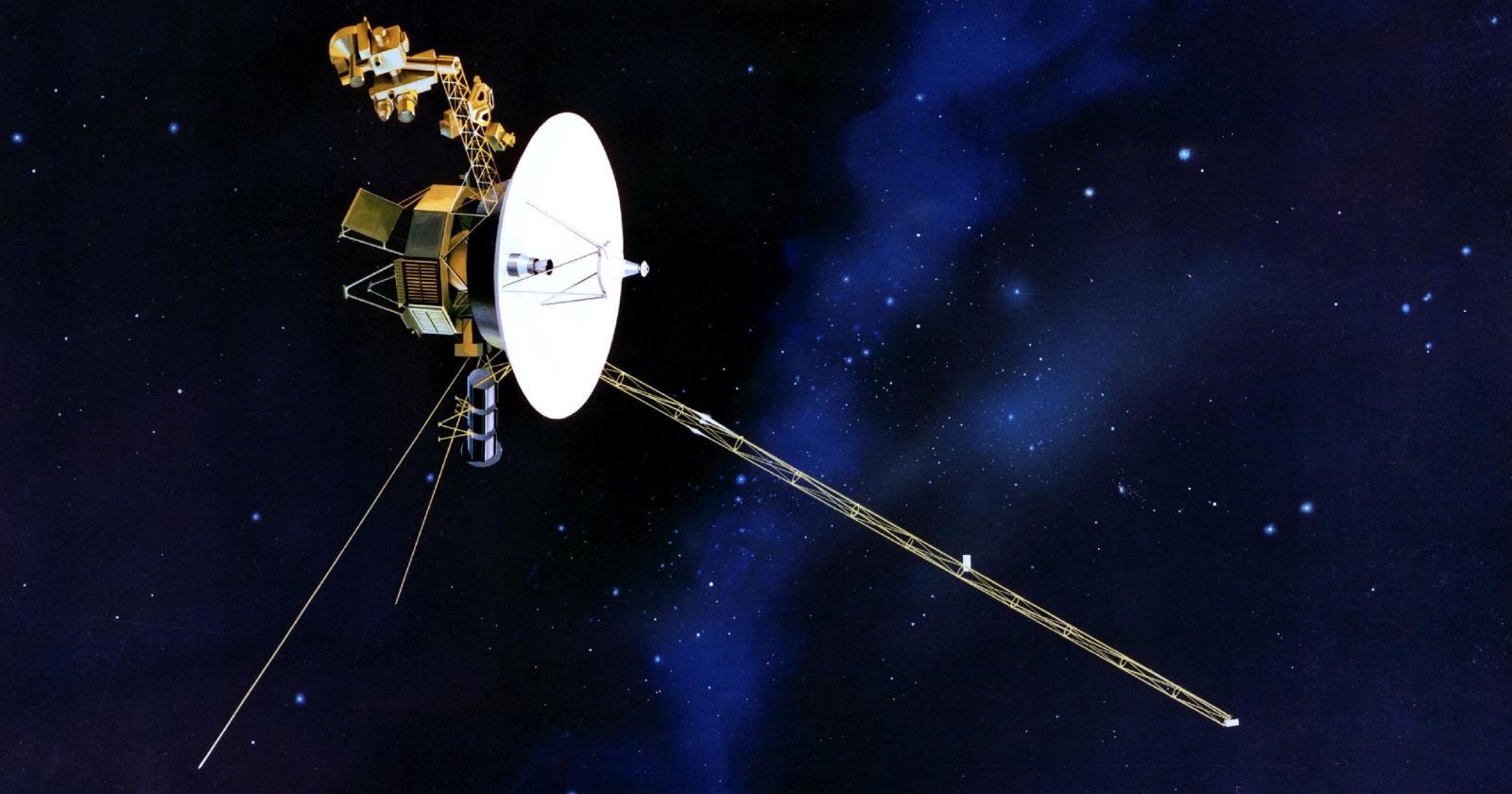
In the spring of 1977, a small group of scientists, writers and artists faced an unusual task. NASA was about to launch two spacecraft, Voyager 1 and Voyager 2, that would eventually leave the solar system. Each would carry a gold-plated record meant to introduce Earth to anyone who might one day find it.
The team had only a few months to decide what should be on it. Choosing the music turned out to be one of the hardest parts, and one choice in particular caused an argument.
A message in a bottle
The project was led by Carl Sagan, the Cornell astronomer who later became famous for the TV series Cosmos. Working with him were Ann Druyan, who became the record’s creative director, writer Timothy Ferris as producer, astronomer Frank Drake, artist Jon Lomberg, Linda Salzman Sagan and others.
The final record carried greetings in 55 languages, natural sounds such as wind, rain and whale song, more than 100 images, and about 90 minutes of music. The team knew that the chances of anyone finding the record were tiny. But they wanted it to represent humanity as fairly and fully as they could.
Music from around the world
The music had to fit on a single record, so every track had to earn its place. The team chose pieces from many cultures: Bach and Beethoven, a Navajo night chant, Peruvian panpipes, Javanese gamelan, a Georgian choir, Indian classical music and songs from Senegal, Bulgaria and Azerbaijan.
They also wanted to include popular music from the 20th century. One candidate stood out: Chuck Berry’s “Johnny B. Goode”, the 1958 hit about a country boy whose guitar playing could take him anywhere. Its energy and driving rhythm made it one of the most influential rock ’n’ roll songs ever recorded.
The argument over rock ’n’ roll
Not everyone was convinced. The folklorist Alan Lomax, who advised the team, had spent decades recording folk music from around the world and had pushed hard for global folk traditions to be included. But he objected to Berry’s song, arguing that rock music was adolescent.
According to Ferris, Sagan’s reply was quick and to the point: there were a lot of adolescents on the planet. If the record was meant to represent Earth, the music of its young people deserved a place too.
Ferris later said Sagan had needed some persuading about the song himself. But once he was convinced, he defended it against the objections. “Johnny B. Goode” became the only rock ’n’ roll song on the record.
The songs that didn’t make it
Some music the team wanted couldn’t be included. They hoped to add the Beatles’ “Here Comes the Sun”, and the band reportedly liked the idea. But the record company, EMI, held the copyright, and the legal situation was too complicated to resolve in time.
The team also had to make hard choices about length. Many pieces had to be cut down or left out entirely, and some team members later said they wished they had included more music from certain parts of the world.
“Send more Chuck Berry”
The choice of Berry’s song soon became part of popular culture. In 1978, the TV show Saturday Night Live ran a sketch announcing that aliens had sent a reply to the Golden Record. Their message was four words long: “Send more Chuck Berry.”
When Berry died in March 2017, aged 90, NASA marked the occasion by reminding people that his music was still travelling through space aboard the Voyagers.
Rock ’n’ roll in interstellar space
Today, both Voyager spacecraft have left the heliosphere, the bubble of solar wind around the Sun, and entered interstellar space. Voyager 1 is now more than 25 billion kilometres from Earth, further than any other human-made object.
The records are expected to last for many millions of years. Long after the Voyagers fall silent, “Johnny B. Goode” will still be drifting between the stars, alongside Bach, Beethoven and music from around the world. It’s a fitting place for a song about a kid who made it big with nothing but a guitar.