
Writer
Astronautix Staff
Articles
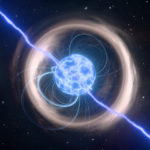 Sky & EarthIn 1967, a 24-year-old graduate student named Jocelyn Bell spotted a tiny smudge on hundreds of feet of chart paper, and it turned out to be the first pulsar ever found, but when the Nobel Prize for the discovery was awarded, it went to her supervisor
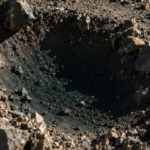 ExplorationIn 2020 NASA signed a contract to buy a scoop of Moon dirt from a private company for $1, and the point wasn’t the dirt, it was settling who is legally allowed to own a piece of the Moon
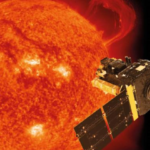 ExplorationIn 1998 the SOHO observatory spun out of control and went silent 1.5 million kilometers from Earth, and engineers found it with a giant radio dish in Puerto Rico, then slowly thawed its frozen fuel, and the spacecraft is still watching the Sun more than 25 years later
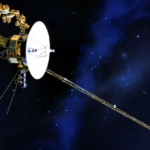 ExplorationHow does a spacecraft launched in 1977, with less memory than a single photo on your phone, still find its way home with data from 15 billion miles away?
 Sky & EarthWhen Japan picked its new astronauts in 2008, the finalists spent a week sealed in an isolation chamber folding 1,000 paper cranes, while psychologists watched to see whether their work got sloppier as the stress built
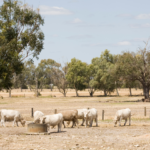 Sky & EarthIn 1969 a fireball broke apart over the small town of Murchison in Victoria, and locals picked warm black stones out of their paddocks and garden beds, never imagining that some of the dust inside them was 7 billion years old, older than the Sun itself
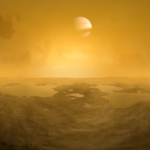 Solar SystemIf you stood on the shore of a lake on Saturn’s moon Titan, the waves lapping at your boots would be liquid methane, the pebbles under your feet would be ice as hard as rock, and the air would be so thick and the gravity so weak that you could strap on wings and fly
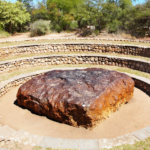 Sky & EarthIn 1920 a Namibian farmer’s plough jolted to a stop against something buried just under his field, and when he dug it out he found a 60-ton slab of iron that had fallen from space, so heavy that more than a century later it still hasn’t been moved an inch from where it landed
 Sky & EarthTwo and a half kilometres beneath the Antarctic ice, a cubic kilometre of frozen water has been wired with 5,800 light sensors, turning the South Pole itself into a telescope that looks down through the entire planet to catch particles arriving from the other side of the sky
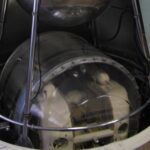 ExplorationWhen Laika was launched on 3 November 1957 the world was told she had lived for days in orbit, but she died within hours as her cabin overheated, and one of the scientists who trained her later said the mission did not teach them enough to justify her death