
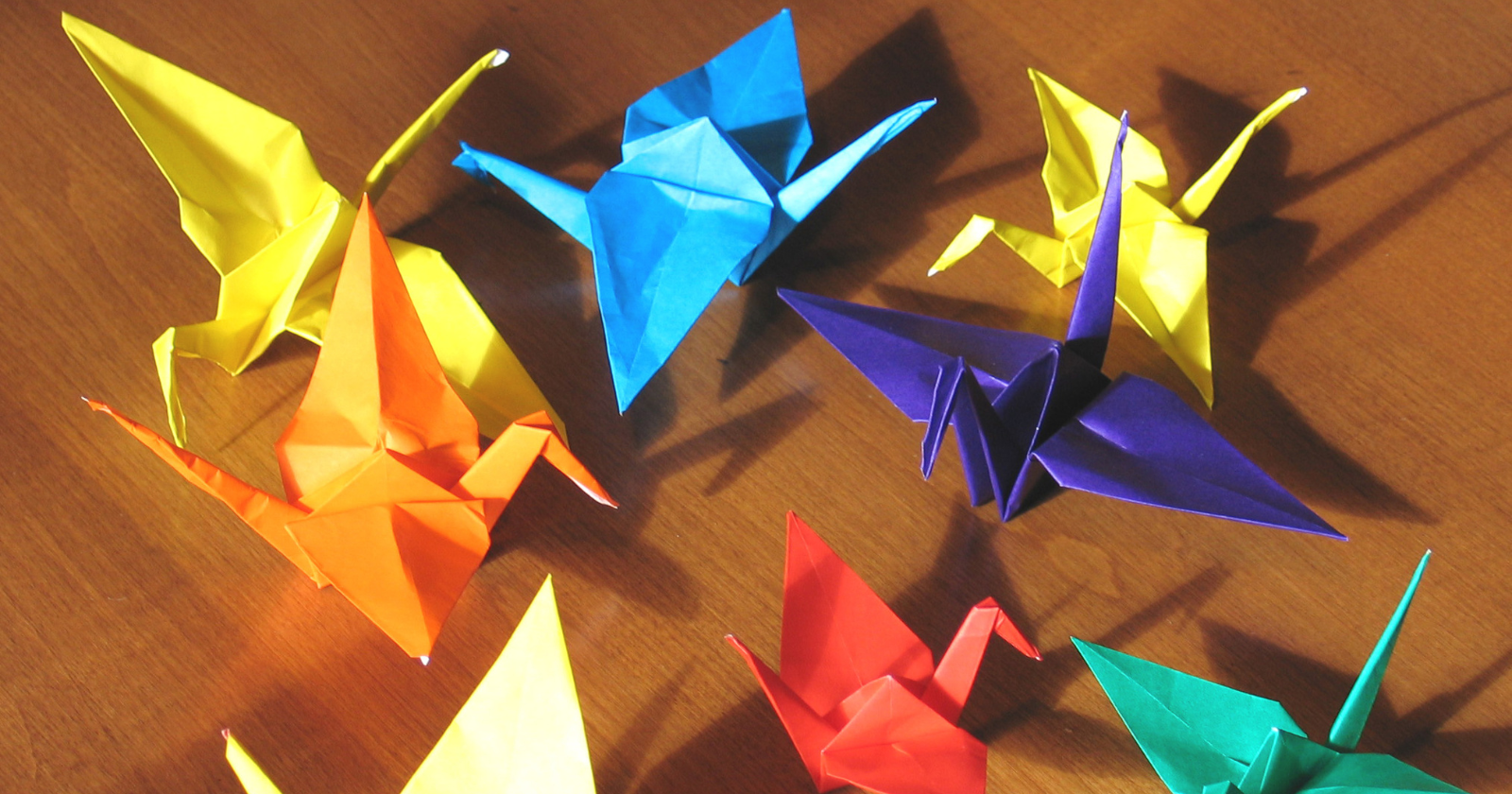
Inside a building at the Tsukuba Space Center north of Tokyo, ten people sat at tables folding small squares of paper into cranes. Above them, behind a bank of closed-circuit TV screens, observers watched every fold.
These were the finalists competing to become Japan’s next astronauts. Out of 963 applicants, just ten had made it to the final stage. And one of their last tests involved a centuries-old Japanese tradition.
Japan’s first new astronauts in a decade
In 2008, the Japan Aerospace Exploration Agency, JAXA, launched its first astronaut recruitment in almost ten years. Japan was preparing for long-duration missions on the International Space Station, where it had built its own laboratory module, Kibo.
The selection process was long and demanding. Applicants went through medical examinations, written tests, English-language assessments and interviews. Those who survived the early rounds were narrowed down to ten finalists for the last and most unusual stage.
A week in the chamber
The finalists spent a week inside an isolation and confinement facility at the space center. It was a self-contained home with bedrooms, a shared living space and a kitchen, and no way to leave.
The idea was to simulate some of the conditions of a long space mission: close quarters, limited privacy, tight schedules and constant teamwork. Cameras recorded the candidates around the clock. Psychiatrists and psychologists watched how they handled stress, cooperated with each other and coped with boredom and fatigue.
The thousand cranes
One task stood out. Each candidate was asked to fold 1,000 origami paper cranes. In Japanese tradition, a person who folds a thousand cranes is granted a wish, and strings of a thousand cranes are often given as symbols of hope or recovery.
The test was devised by JAXA’s chief medical officer, Shoichi Tachibana. As candidates finished each crane, they added it to a single long thread. That created a record of their work in order, from the first crane to the last.
At the end of the week, the strings were taken away and examined. Evaluators compared early cranes with later ones, looking for signs that the folding had become rushed or careless as time ran short and pressure grew. Writer Mary Roach, who observed the selection for her book Packing for Mars, described it as a kind of forensic origami.
Why sloppy cranes matter
It might seem like a strange way to choose astronauts, but the logic is simple. Spaceflight involves long stretches of careful, repetitive work, often under time pressure and in cramped conditions far from home.
A small mistake on the ISS, such as a missed step during maintenance or an error in a science experiment, can have serious consequences. An astronaut needs to stay precise and patient even when they’re tired, stressed or bored. The cranes revealed whether candidates’ attention to detail held up when the task felt endless.
Who made it
In February 2009, JAXA announced its new astronaut candidates: Takuya Onishi, a 33-year-old airline pilot, and Kimiya Yui, a 39-year-old Air Self-Defense Force pilot. A few months later, JAXA added a third finalist from the group, Norishige Kanai, a medical doctor.
All three went on to fly to the International Space Station. Yui flew in 2015, Onishi in 2016 and Kanai in 2017. Onishi and Yui have since returned for second long-duration missions.
What it tells us about astronaut selection
The crane test is a reminder that astronauts aren’t chosen only for physical fitness or technical knowledge. Personality and temperament matter just as much, especially on long missions where crews must live and work together for months.
Space agencies use a range of methods to assess this, from isolation studies to group problem-solving exercises. JAXA’s version simply drew on a familiar tradition, and turned a thousand paper birds into a careful record of how each person handles pressure.