
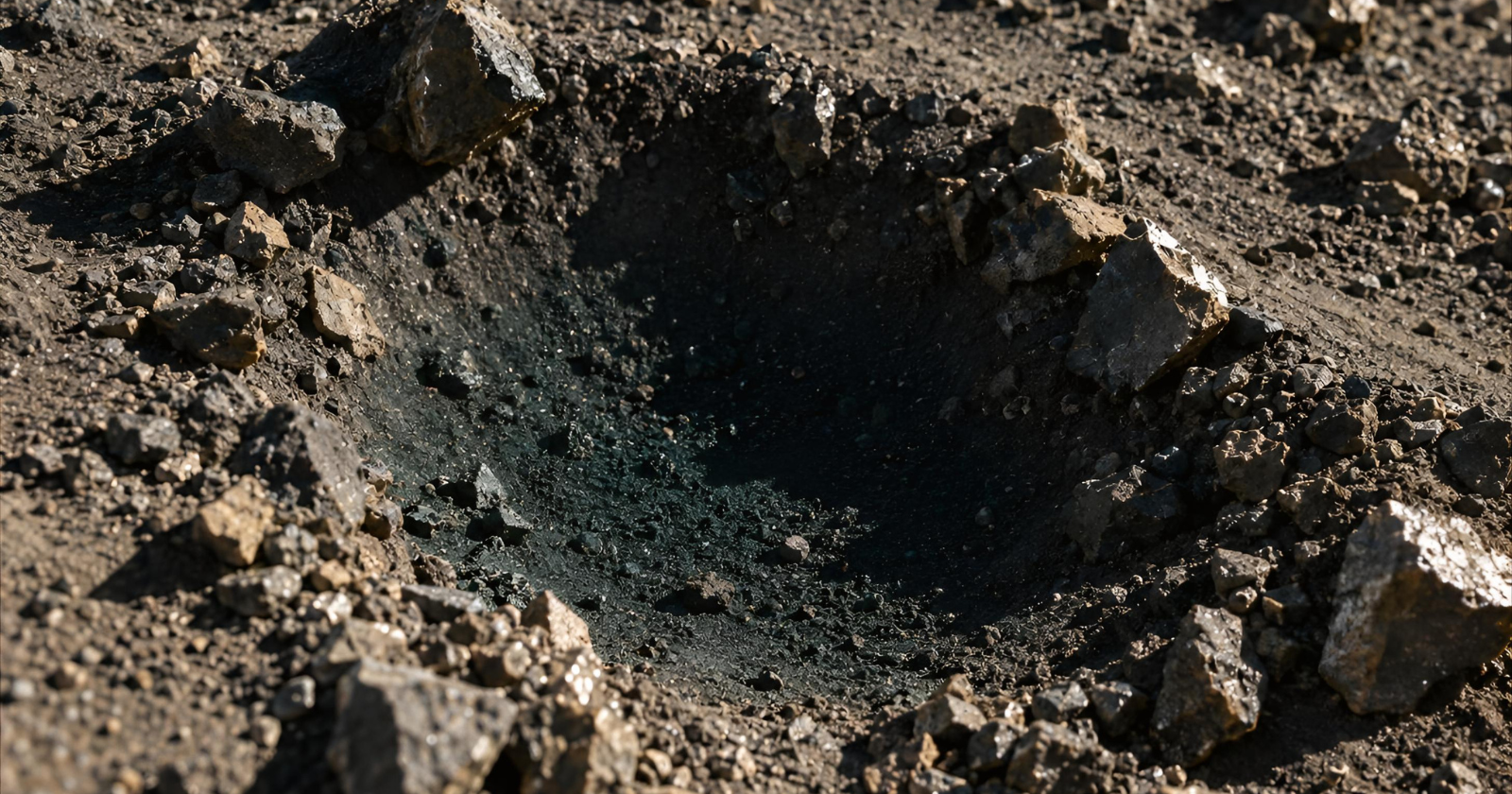
In December 2020, NASA announced one of the strangest purchases in its history. It agreed to pay a private company just $1 for a small scoop of soil from the Moon.
The company wouldn’t even have to bring the soil back to Earth. It only had to scoop some up, photograph it and then hand ownership to NASA, right there on the lunar surface. The price was almost meaningless. What mattered was the principle behind it.
Four companies, four tiny prices
NASA selected four companies to collect lunar regolith, the dusty, rocky material that covers the Moon’s surface. Each would gather a small sample, between 50 and 500 grams, during a future landing.
The prices were remarkably low. Lunar Outpost, based in Colorado, bid just $1. ispace Japan and ispace Europe each bid $5,000, and Masten Space Systems bid $15,000. Altogether, the four contracts were worth $25,001.
Why buy dirt you never collect?
NASA said the goal was to establish a precedent: that private companies can extract resources in space, own them and sell them. Once the companies scooped up the soil, they would transfer ownership to NASA in place, and the material would become NASA’s property.
The companies bid so low because they weren’t in it for the money. They saw it as a way to help set the rules for a future in which companies mine the Moon for water, metals and other resources.
What the law says
The main law of space is the Outer Space Treaty of 1967, signed by more than 100 countries, including the US, Russia and China. It says no nation can claim the Moon or any other celestial body as its territory.
But the treaty doesn’t clearly say whether resources taken from the Moon can be owned. In 2015, the US passed a law stating that American citizens and companies can own space resources they extract. Luxembourg, Japan and the United Arab Emirates have passed similar laws.
Owning resources, not land
That distinction is key. The $1 contract was never about owning a patch of the Moon itself. It was about owning material taken from it, in the same way a fishing boat can own the fish it catches in international waters without owning the sea.
In 2020, NASA also launched the Artemis Accords, a set of principles for exploring the Moon that support this idea. More than 50 countries have now signed them. However, some major space powers, including Russia and China, haven’t signed, and some critics argue that resource extraction is a form of appropriation that the treaty forbids. The question isn’t fully settled.
Did NASA ever get its dirt?
So far, the transfers have proved harder than the contracts. The lander that ispace Japan planned to use crashed on the Moon in 2023, and the company’s second lander, carrying the ispace Europe rover, crashed in 2025.
Lunar Outpost’s rover flew to the Moon on an Intuitive Machines lander in 2025, but the lander tipped over on landing and the rover was never deployed. Masten Space Systems went bankrupt in 2022. As far as public reports show, none of the transfers has been completed yet.
Why it still matters
Even without a completed sale, the contracts helped shape the debate about who can use the Moon’s resources. As NASA and other countries plan bases near the lunar south pole, water ice in the region could become extremely valuable for drinking water, oxygen and rocket fuel.
The rules being set now, through laws, agreements and small symbolic deals like a $1 scoop of dirt, will help decide who can use those resources, and how.