
Imagine standing on a ship in the middle of the South Pacific. In every direction, there is nothing but grey water for more than 2,600 kilometres. No islands, no shipping lanes and no other people for days in any direction.
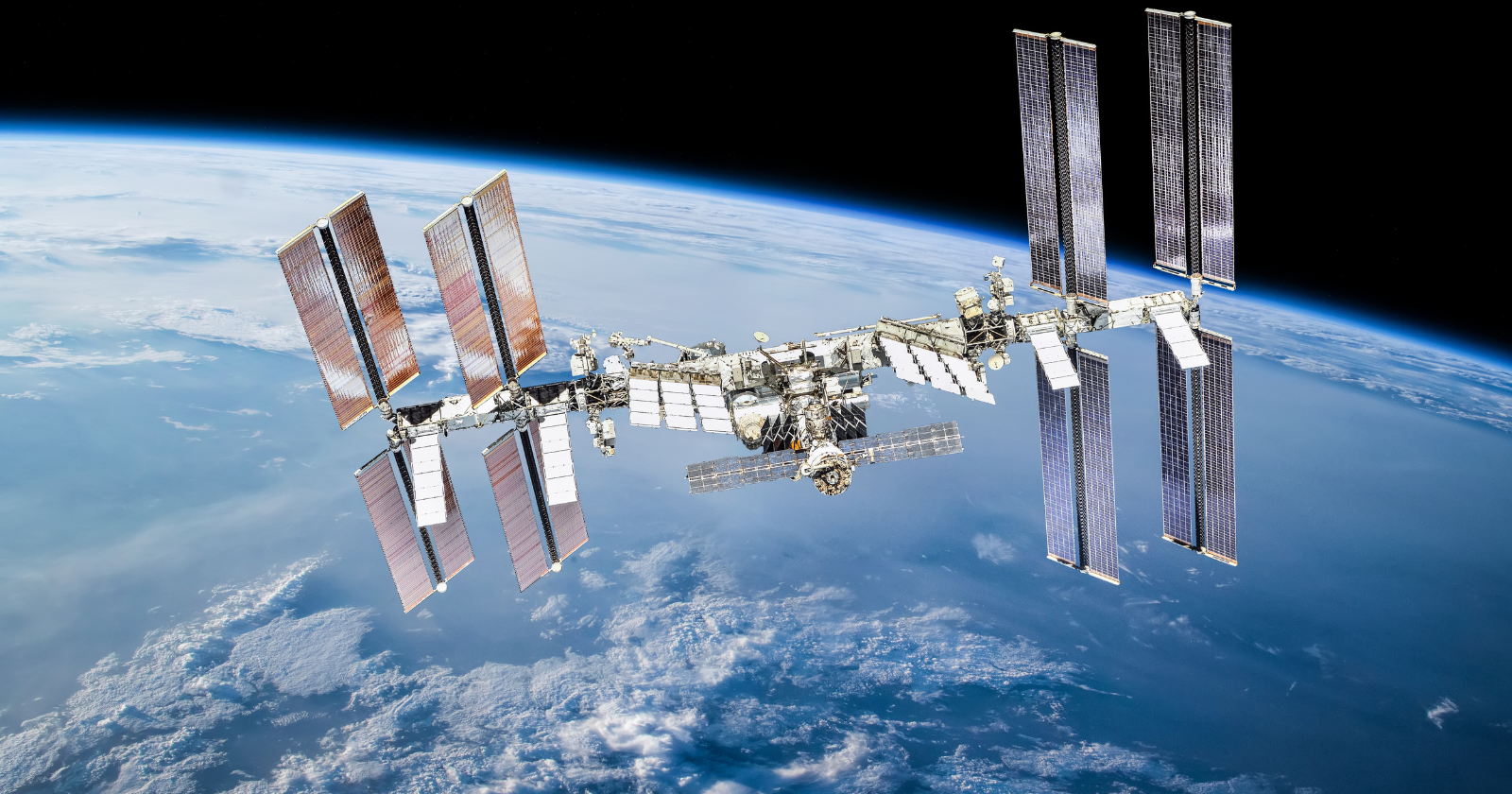
This place is called Point Nemo. It is the spot in the ocean farthest from any land on Earth. It is so isolated that the nearest humans are often not on land or at sea at all, but in space, aboard the International Space Station, as it orbits about 400 kilometres overhead.
Finding the loneliest place on Earth
Point Nemo is the ocean’s “pole of inaccessibility,” the point hardest to reach from any coastline. It wasn’t pinpointed until 1992, when Croatian-Canadian engineer Hrvoje Lukatela used computer calculations to find it.
It lies about 2,688 kilometres (1,670 miles) from the nearest land: Ducie Island, part of the Pitcairn Islands, to the north; Motu Nui, near Easter Island, to the northeast; and Maher Island, off Antarctica, to the south. It was named after Captain Nemo, the submarine captain in Jules Verne’s novel Twenty Thousand Leagues Under the Sea.
Closer to space than to people
Because Point Nemo is so remote, anyone floating there would be thousands of kilometres from the nearest town. The International Space Station, by contrast, orbits about 400 kilometres above Earth.
So whenever the station passes over that part of the Pacific, its crew are the closest human beings to Point Nemo by a wide margin. On most days, no ship comes anywhere near it.
The spacecraft cemetery
That isolation makes the region around Point Nemo ideal for something unusual: disposing of spacecraft. When a large spacecraft reaches the end of its life, it can’t simply be left in orbit, and letting it fall at random could put people at risk.
Instead, space agencies steer old spacecraft down into a vast, empty stretch of ocean near Point Nemo, sometimes called the spacecraft cemetery. Most of each spacecraft burns up as it plunges through the atmosphere. The pieces that survive fall into the sea and sink to the ocean floor, around 4 kilometres down.
What lies beneath
Since 1971, more than 260 spacecraft have been brought down in the region. Russia, and the Soviet Union before it, is by far the largest contributor. Its six Salyut space stations ended up there, along with more than 140 Progress cargo ships that carried supplies to orbiting stations.
Other agencies have used it too. Europe’s Automated Transfer Vehicle cargo ships, Japan’s HTV cargo ships and parts of SpaceX vehicles have all been sent to the area. Experts point out that the total amount of hardware is tiny compared with the shipping containers and sunken ships elsewhere in the world’s oceans.
The fall of Mir
The biggest object ever to come down in the spacecraft cemetery is Russia’s Mir space station. Launched in stages from 1986, Mir was home to cosmonauts and astronauts from many countries for 15 years.
By 2001, it was ageing and expensive to maintain. On 23 March that year, Russian controllers fired engines on a docked cargo ship to slow it down and guide it into the atmosphere. Mir weighed more than 130 tonnes. Most of it burned up, but experts believe large chunks, some possibly the size of a small car, survived and splashed down in the South Pacific.
The International Space Station’s final journey
The International Space Station itself is expected to end up in the same place. NASA plans to retire the station around 2030 and has hired SpaceX to build a special deorbit vehicle that will push it down over the remote South Pacific.
At more than 400 tonnes, the station is about three times heavier than Mir, making its descent the largest controlled re-entry ever attempted. One day, the astronauts who once looked down on Point Nemo from above may watch from Earth as their old home comes to rest in the same lonely stretch of ocean.