
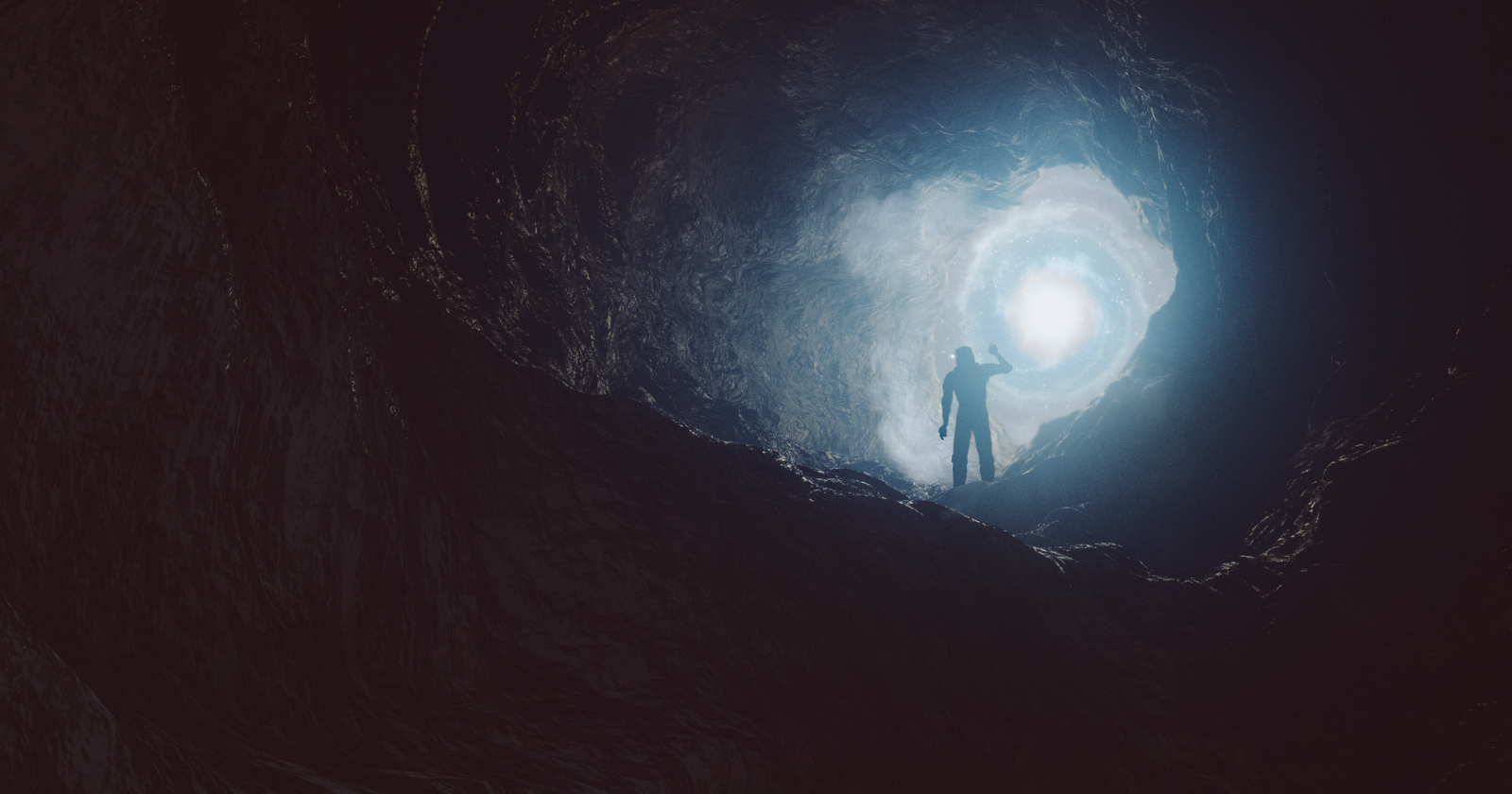
Hundreds of metres beneath the mountains of Sardinia, a small group of people in helmets and headlamps squeeze through a narrow passage of wet rock. There is no daylight, no phone signal and no quick way out. They have been underground for days, and they will stay for several more.
They aren’t cavers on holiday. They are astronauts, and this is part of their training. The European Space Agency’s CAVES course sends crews from around the world deep underground to practise the teamwork, decision-making and endurance they will need in space.
Why caves are like space
CAVES stands for Cooperative Adventure for Valuing and Exercising human behaviour and performance Skills. ESA started the course in 2011, and astronauts from Europe, the United States, Japan, Russia, China and Canada have taken part.
Caves share more with spaceflight than you might expect. Both are dark, isolated and potentially dangerous environments where help is far away. Crews must move carefully, manage limited supplies, follow strict safety rules and rely completely on each other. In a cave, as in space, a small mistake can quickly turn into a serious problem.
Training before the descent
The course lasts around two to three weeks. In the first part, astronauts learn the skills they will need underground, including caving safety, roping and abseiling techniques, mapping and photography in complete darkness.
Then they descend into the cave system and set up camp underground. In some years, crews have spent around six nights below the surface, with base camps hundreds of metres from the entrance. Once there, they live much as they would on a space mission, following a schedule, keeping in contact with a support team above ground and carrying out scientific work.
Life underground
Conditions are tough. The caves are cold and extremely damp, and there is no natural light to mark day and night. Crews sleep in a basic camp, cook simple meals and deal with tiredness, discomfort and each other’s habits in a confined space.
Their work is real science. Astronauts map unexplored passages, monitor the cave’s air and water, and collect samples of microbes and tiny cave creatures. Some of their discoveries have contributed to scientific research on underground ecosystems, including previously unknown species.
What the trainers are watching
The point isn’t just the caving. Trainers want to see how the crew works together under pressure. Who takes the lead when a decision has to be made? How do people communicate when they’re cold and exhausted? How do they handle disagreements, mistakes and fear?
Crews are deliberately mixed, with astronauts from different countries and space agencies who may not share a first language or culture. That reflects life on the International Space Station, where people from different backgrounds must live and work together for months. Learning to cooperate in the dark helps prepare them for that.
A course that keeps evolving
Over the years, CAVES has expanded beyond its original Sardinian caves. Recent editions have used other cave systems in Italy, and crews now test new tools, such as electronic field notebooks, that could one day be used on the Moon.
The course also prepares astronauts for future missions to the Moon and Mars. Some scientists believe lava tubes, underground tunnels formed by ancient lava flows, could one day shelter explorers from radiation and extreme temperatures. Learning to explore safely underground on Earth could help astronauts do the same on other worlds.
The crews of today
In June 2026, five explorers from three space agencies completed the latest CAVES course in Italy. They included NASA astronaut Tracy Dyson, ESA astronaut Rosemary Coogan and JAXA astronaut Ayu Yoneda. They were joined by NASA astronaut candidate Ben Bailey and John McFall, a member of ESA’s astronaut reserve and its Fly! project, which is studying whether a person with a physical disability can fly in space.
For astronauts who have already been to space, the cave offers a chance to sharpen their skills. For newer recruits, it’s an early test of what long missions can demand. Either way, the darkness of a cave proves to be a surprisingly good place to prepare for the darkness of space.