
Writer
Brendan Brown
Articles
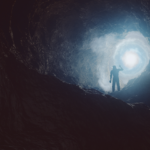 Sky & EarthBefore some astronauts ever leave Earth, the European Space Agency sends them deep into the caves of Sardinia for days at a time, sleeping underground and mapping tunnels in total darkness, so trainers can watch how they behave when they are cold, tired and cut off
 Deep SpaceThought of the day from Carl Sagan: “The cosmos is within us. We are made of star-stuff. We are a way for the universe to know itself.”
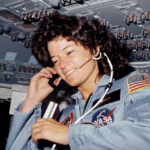 ExplorationBefore Sally Ride became the first American woman in space in 1983, NASA engineers asked her, in all seriousness, whether 100 tampons would be enough for a one-week mission
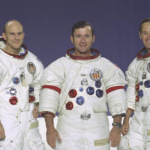 ExplorationIn 1972 Apollo 16 astronaut Charlie Duke left a photo of his wife and two young sons on the Moon, sealed in plastic, with a note on the back saying it was the family of an astronaut from planet Earth, and it is still lying there in the dust
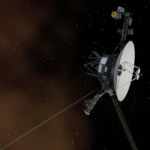 ExplorationVoyager 1 left Earth in 1977 carrying computers with less memory than a single photo on your phone, and on November 18 it becomes the first object humans have ever built to travel a full light-day from home, about 16 billion miles away
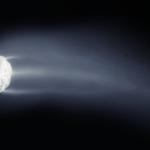 Deep SpaceA comet’s tail doesn’t stream out behind it like smoke from a moving car, because it always points away from the Sun, which means that as a comet heads back out of the solar system, its tail actually flies out in front of it
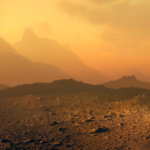 ExplorationIn 1982 the Soviet Venera 14 probe landed on Venus and pressed an instrument into the ground to test how hard the surface was, but by sheer bad luck it touched down right on the camera lens cap the probe had just popped off, so it measured the cap instead
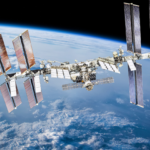 Sky & EarthThe International Space Station has had people living aboard without a break since November 2, 2000, which means anyone younger than 26 has never lived through a single day when every human being was on Earth
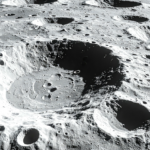 ExplorationIn 1970 a Soviet robot probe drilled into the Moon and flew about 100 grams of soil back to Earth, and in 2018 three tiny grains from that sample, barely visible to the naked eye, sold at auction for $855,000
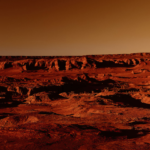 Solar SystemMars is called the Red Planet, but if you stood on its surface most of the ground around you would look closer to butterscotch or caramel brown, because the red comes from a fine dust of rusted iron that coats everything and hangs in the air