
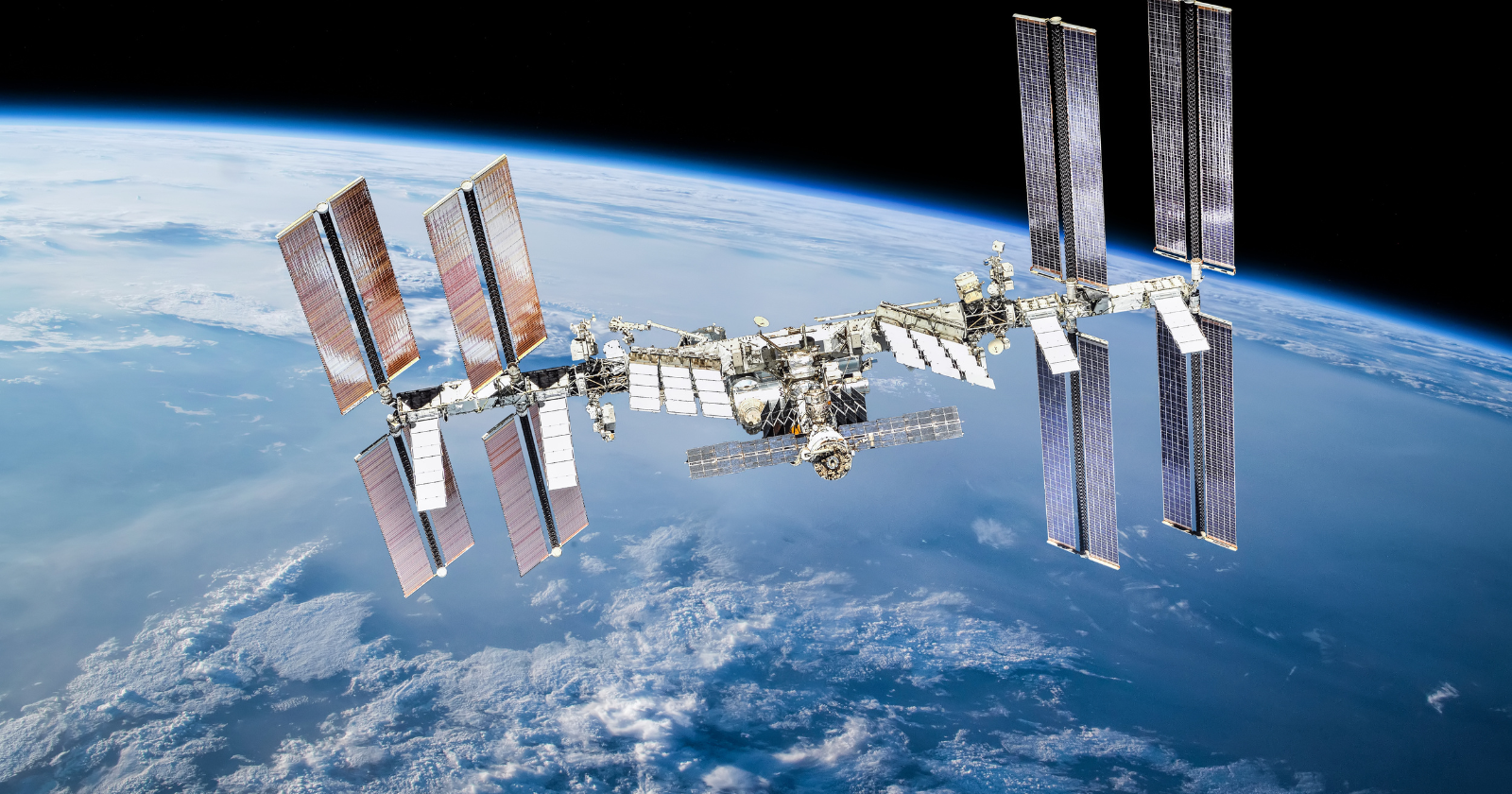
On November 2, 2000, a Soyuz spacecraft docked with a small, half-built outpost orbiting about 400 kilometers above the Earth. Three men floated through the hatch: NASA astronaut Bill Shepherd and Russian cosmonauts Yuri Gidzenko and Sergei Krikalev.
They switched on the lights, got the life-support systems running and settled in. They were the first long-term residents of the International Space Station, and humans have been living there ever since.
Twenty-six years and counting
This month, the station passed 26 years of continuous human presence. Every day since that first docking, at least one person has been aboard, orbiting the Earth roughly 16 times a day.
That means anyone born after November 2, 2000, has lived their entire life while humans were living in space. They’ve never experienced a single day when the whole human species was on the ground at the same time.
As of the station’s 25th anniversary in November 2025, more than 290 people from 26 countries had visited, from professional astronauts to scientists and private paying visitors.
How the streak began
The International Space Station grew out of a partnership among the United States, Russia, Europe, Japan and Canada. The first module, Russia’s Zarya, launched in November 1998, followed weeks later by NASA’s Unity node.
Expedition 1 lifted off from the Baikonur Cosmodrome in Kazakhstan on October 31, 2000, and arrived two days later. Over the following four months, the crew activated life-support systems, unpacked critical equipment and received supply missions, laying the foundation for everything that followed.
Since then, crews have rotated on and off the station through a careful handover process. A new crew arrives before the old one leaves, so the station is never left empty.
Before the station
Humans had lived in space for long stretches before. The Soviet and later Russian space station Mir was occupied almost continuously for nearly 10 years, from 1989 to 1999. Mir’s record stood until the ISS passed it in 2010.
But when Mir’s last crew left in August 1999, there were stretches when nobody was in space at all. From then until the first ISS crew launched in October 2000, there were days when every human being was on Earth. That’s why people born before November 2000 can, technically, remember a time when humanity was entirely grounded.
Close calls
Keeping people in orbit for 26 years hasn’t always been smooth. After the Space Shuttle Columbia disaster in 2003, the shuttle fleet was grounded, and the station had to be staffed with a reduced crew of two, ferried by Russian Soyuz spacecraft.
In October 2018, a Soyuz rocket failed during launch, and the two crew members aboard landed safely after an emergency abort. For a time, engineers considered whether the station might have to be left empty. Instead, the next crew launched successfully in December, and the streak continued.
A home in orbit
Living aboard the station isn’t easy. Crews deal with weightlessness, radiation, cramped quarters and long separations from family. They exercise for about two hours a day to slow muscle and bone loss, and they work on hundreds of experiments, from growing plants to studying how the human body changes in space.
Over the years, the station has hosted crews from many nations, celebrated holidays, survived equipment failures and served as a base for more than 270 spacewalks. It has become one of the longest-running international collaborations in history.
How long will it last?
The streak may not go on forever, at least not on the ISS. NASA and its partners plan to retire the station around 2030 and guide it into a remote part of the Pacific Ocean. SpaceX is building a special vehicle to help steer it down safely.
Humanity’s continuous presence in space may continue elsewhere. China’s Tiangong station has hosted crews since 2021, and several companies are developing commercial space stations to replace the ISS.
If all goes to plan, the generation born after November 2000 may never see a day when every human being is on Earth, and neither may the generations that follow.