
At 11:12:46 Moscow Time on 30 October 1967, a Soyuz 7K-OK spacecraft known to the public only as Kosmos 188 lifted off from Site 1. Sixty-two minutes later it was mechanically locked to another Soyuz already circling the Earth.
That brief interval produced the first automatic docking in space, as John Uri of NASA History records. Neither spacecraft carried a crew. The approach, the final closure and the capture were all flown by machines.
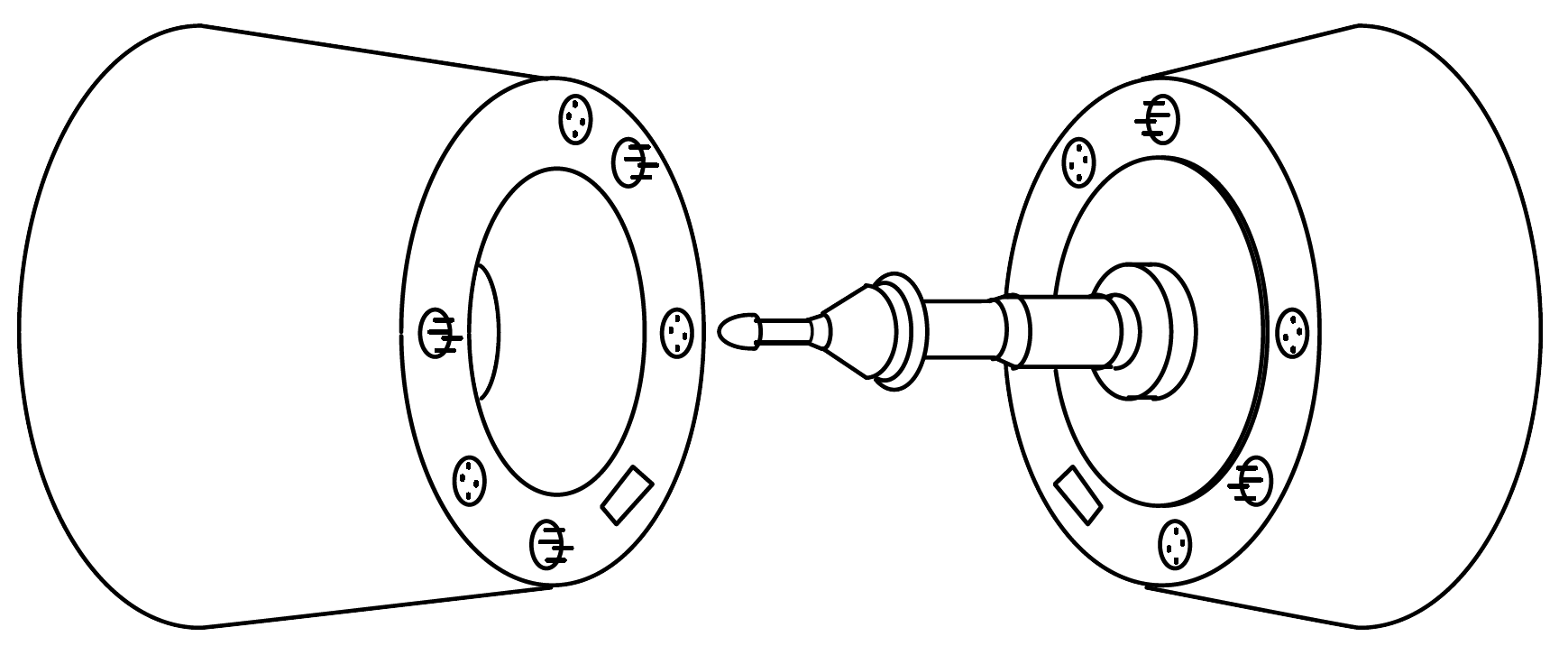
What the machines did not finish was the last few centimetres. The two ships held together mechanically, but no electrical connection could be made between them.
A test flight flown in the shadow of Soyuz 1
Kosmos 186 and Kosmos 188 were unmanned Soyuz variants still being recertified after the Soyuz 1 accident of April 1967, which killed cosmonaut Vladimir Komarov. The programme needed to show that the redesigned ship could fly, rendezvous and come home before anyone sat in one again.
Kosmos 186, Soyuz 7K-OK No. 6, lifted off on 27 October 1967 at 12:30 Moscow Time from Site 31 and took the active role. Kosmos 188, No. 5, followed three days later as the passive target. Internally the two were called Amur and Baikal.
Much of the chase went unwatched. Anatoly Zak writes that the ships closed on one another while crossing the Pacific, the Atlantic and then Africa, out of range of mission control, and that the entire rendezvous lasted just 54 minutes. That number measures the approach itself. It is not the interval from the launch of Kosmos 188, which Uri puts at 62 minutes to docking.
Gemini 8 had docked with an Agena target vehicle in March 1966, but with a pilot at the controls. October 1967 was the first time the whole sequence ran without human hands.
Automation was the point. A ship able to find its target and latch onto it unaided could serve crews already in orbit, which is exactly what later Soviet programmes would ask of it.
Flying hardware uncrewed before trusting it with people was long-standing Soviet practice, a habit that reached back to the mannequin orbited before Gagarin's flight.
The eighty-five millimetres that never closed
Capture worked. Berthing did not. Television images returned from orbit confirmed that the two vehicles were in hard mate, yet the electrical interfaces never engaged.
Two vehicles launched three days apart had found each other and latched.
Zak's account of the docking puts a figure on the shortfall, an estimate made by docking experts after the fact.
According to estimates made by docking experts, the ships were just 85 millimeters apart.
Uri writes that the pair remained mechanically docked for three and a half hours, although an electrical connection could not be made. Zak adds that controllers, judging a long flight in a partially docked configuration too risky, ordered the two to separate after two orbits of joint flight.
No single cause was ever settled on. In the postflight review, Lev Vilnitsky confirmed that the ships had stayed around 85 millimetres apart and explained it as a lack of clearance between the secondary drogues and their outlets when the two docking ports were at drastically different temperatures. Vladimir Syromyatnikov's memoirs raise a different possibility, that a protective plastic film was drawn into the mechanism. Another account suggests side motion bent the drogue. The explanations coexist.
One capsule recovered, one destroyed on the way down
The descent module of Kosmos 186 was recovered in the Soviet Union on 31 October 1967. The return was not textbook. A failure of flight-control sensors prevented the planned aerodynamic descent, so the capsule flew a ballistic re-entry before its soft landing.
Kosmos 188 was directed to reentry a few days afterwards and never reached the ground. In Uri's words, "the accidental firing of Kosmos 188's self-destruct mechanism during the descent prevented its recovery on November 2." Zak attributes the trigger to a flight-control failure, and RussianSpaceWeb's flight table lists the vehicle as blown up on descent on 3 November, so published accounts differ over the calendar day.
Soviet public coverage gave none of this away. The two vehicles were described simply as satellites, concealing that they were Soyuz 7K-OK spacecraft.
Uri does not present the flight as flawless, and the anomalies were real. The capability, though, had been demonstrated. The Soviets repeated the automatic docking with Kosmos 212 and 213 in April 1968, and a crewed attempt later that year ran into trouble of an entirely different kind.
From there the technique became infrastructure. Automatic dockings were integral to the Salyut stations and to Mir, and in Uri's phrase they "remain in practice today on the Russian segment of the International Space Station", where people have lived without interruption since 2000.
The Soyuz line itself outlasted the Soviet Union by decades, long enough that NASA astronauts assigned to fly it spent months at Star City learning the spacecraft in Russian. Its ancestor spent three and a half hours in 1967 clamped to an identical twin, 85 millimetres short of finishing the job.