
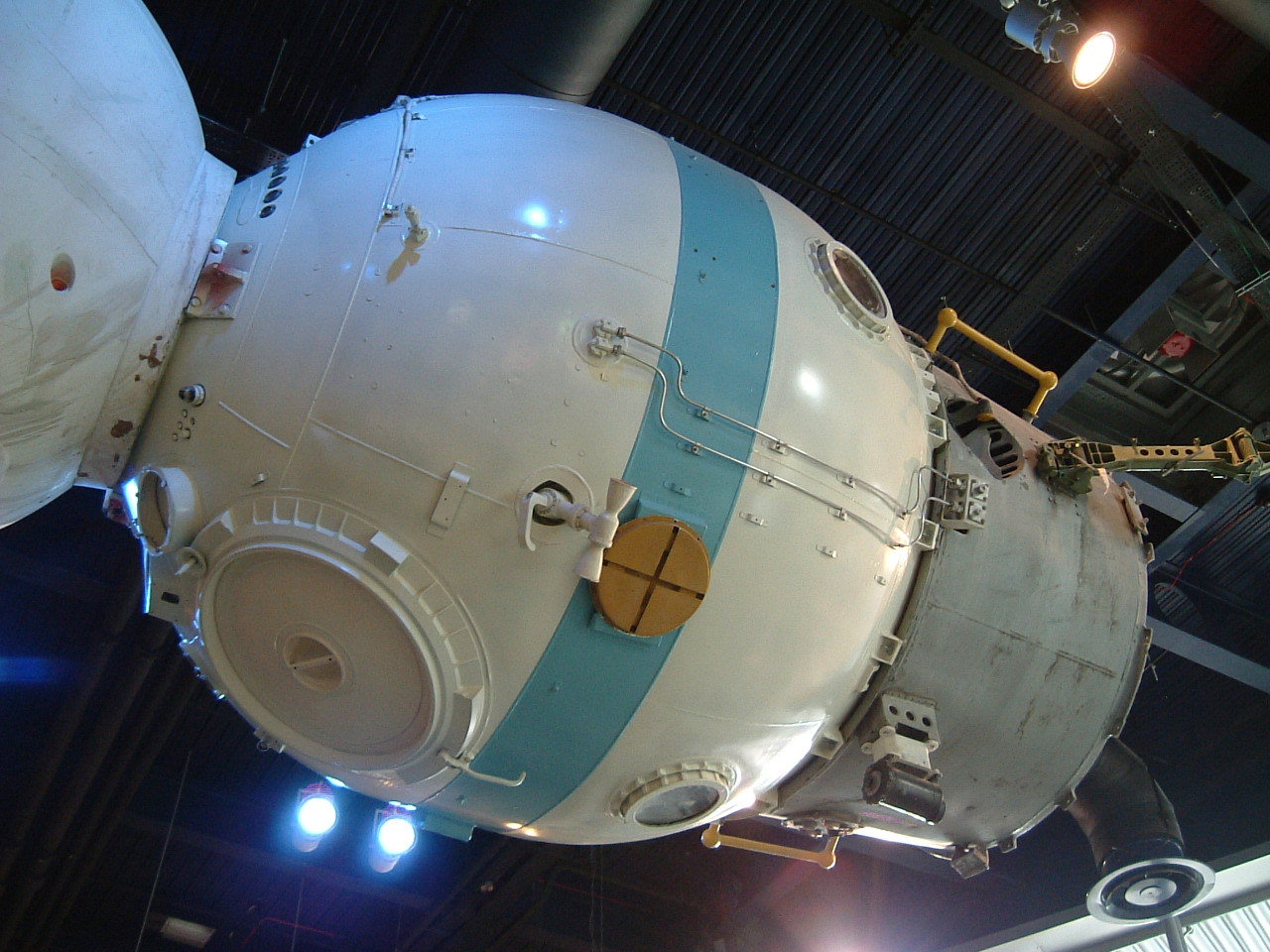
Fifty-eight years ago, on 26 October 1968, Soviet cosmonaut Georgy Beregovoy brought his Soyuz 3 spacecraft to within 200 m of the uncrewed Soyuz 2 and then burned almost all of his orientation fuel in a failed attempt to dock with it. He had not noticed that the target was upside down relative to his own craft.
Soyuz 3 launched from Baikonur with Beregovoy as its only occupant. It was the second crewed flight of the Soyuz programme, using the Soyuz 7K-OK spacecraft. Beregovoy was 47 and a decorated flying ace of the Second World War. He was the oldest person to have gone into orbit up to that time.
The target, Soyuz 2, had been launched a day earlier, on 25 October 1968. The Soviet government did not report its launch until Soyuz 3 was already aloft.
Soyuz 3 was close to Soyuz 2 about half an hour after launch. Beregovoy guided his craft to within docking range, 200 m from the target. The docking did not succeed. Beregovoy failed to notice that Soyuz 2 was upside down relative to his spacecraft.
The failure was later attributed to manual control: the cosmonaut repeatedly put his spacecraft into an orientation that nulled the automatic docking system. Of the 80 kg of orientation fuel allocated for the flight, only 8 to 10 kg remained after the first docking attempt.
A second rendezvous and docking attempt was made the next day. It also failed. Soyuz 2 was then returned to Earth, landing by 07:51 GMT the following day.
The attempt had been planned in advance. A flight plan dated 1 October 1968 called for a "0+1" docking, meaning an uncrewed spacecraft and a single cosmonaut, on 25 October. The manoeuvres carried out during the mission amounted to a total change in velocity of 31 m/s.
With docking abandoned, Beregovoy spent two more days in orbit carrying out topographical and meteorological observations. He gave a television tour of the interior of the spacecraft.
During the mission the Soviet Union published a photograph of the R-7 launch vehicle on its pad. It was the first time the rocket had been shown to the outside world.
Soyuz 3 landed on 30 October 1968 after 81 orbits, near Karaganda in Kazakhstan, in blizzard snow. Beregovoy said afterwards that he had hardly felt the impact of landing.
Soviet authorities hailed the mission as a complete success. The docking attempt was concealed. The Western press reported a "successful rendezvous". The intention to dock was disclosed only after the break-up of the Soviet Union.
Following the flight Beregovoy was promoted to major general and became head of the Cosmonaut Training Center at Star City.
The flight came 18 months after Soyuz 1, in April 1967, which killed cosmonaut Vladimir Komarov. The Soyuz spacecraft had been revised for the Soyuz 2 and Soyuz 3 missions.
As of October 2026, Soyuz 3 remains the last occasion on which a Soviet or Russian cosmonaut launched alone on an entirely solo orbital mission.