
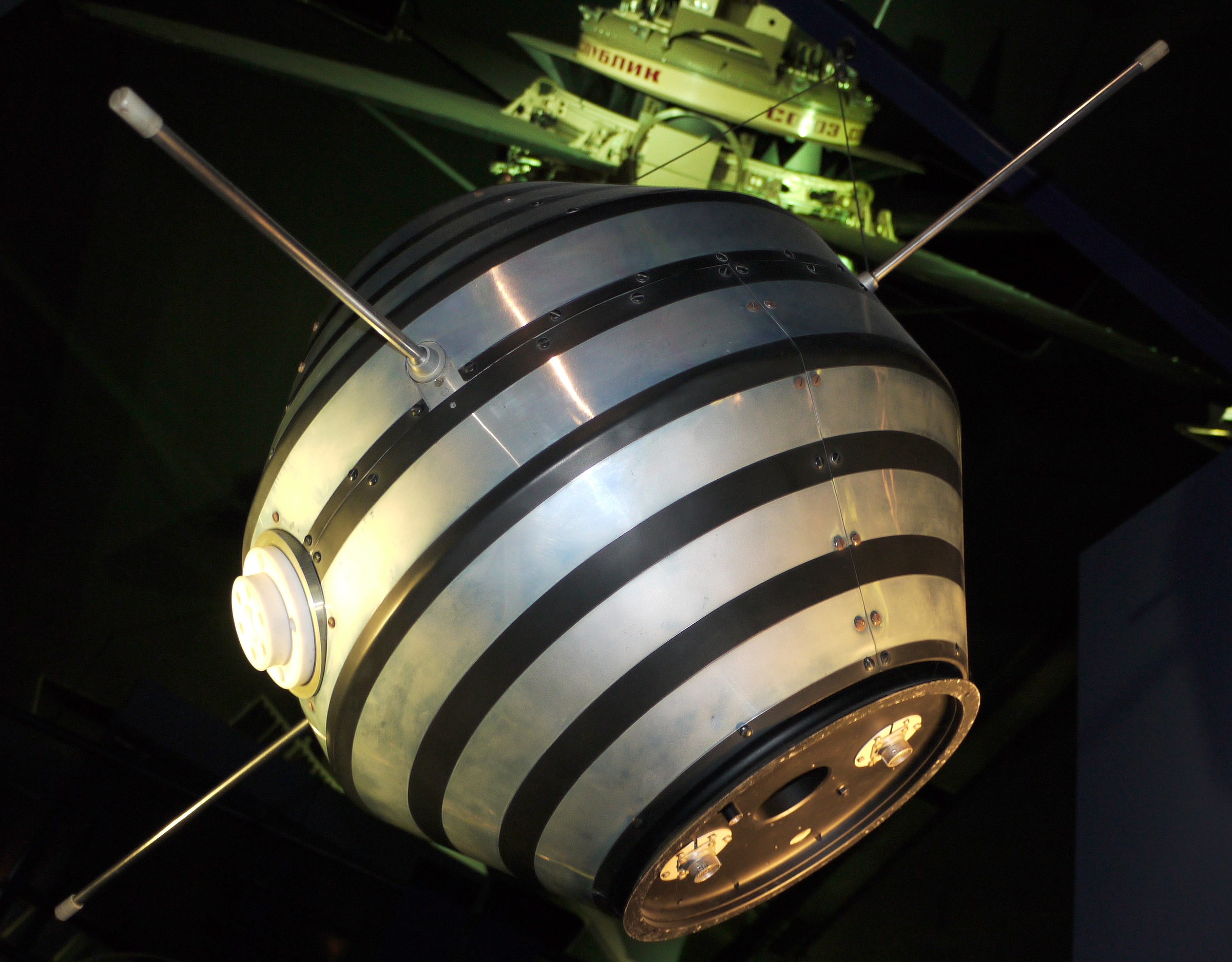
On this date in 1965, at 14:47 GMT, a Diamant A rocket lifted off from the Hammaguir range in the Algerian Sahara and placed a 42 kg satellite called Astérix into orbit. With that launch France became the third country to put a satellite in orbit on a launcher of its own, after the Soviet Union and the United States. Sixty-one years later, the satellite is still catalogued as an object in orbit.
The Astronautix entry for Astérix lists it as the first French satellite. It records the satellite as Asterix 1, with the payload listed as A 1, the international designation COSPAR 1965-096A and the satellite catalogue number 1778. CNES and Satcat list the object as A-1. Astronautix's launch-site field spells the site Hammaguira.
A first flight for the Diamant launcher
Astronautix states that the satellite was launched to test the Diamant launching vehicle for the first time. The orbit it reached measured about 527 by 1,697 km, inclined at 34.3 degrees, with a period of 107.5 minutes.
The French space agency CNES, in a French-language retrospective published for the 60th anniversary on 26 November 2025, describes Diamant A as a launcher that grew out of a military programme. That programme was named for precious stones, the "Pierres précieuses" series, and its prototypes were built between 1961 and 1965.
CNES quotes Christian Lardier, president of the Institut français d'Histoire de l'espace, who says the programme was created by and for the army at the impulse of General de Gaulle. In Lardier's account, de Gaulle chose to tie France to neither the Soviets nor the Americans.
The satellite was military as well. CNES explains that the "A" in its designation stood for Armée, the French word for army.
CNES itself, founded in 1962, took part in the mission by handling orbital tracking, since the army had no means of following objects in orbit. The agency operated four stations at the time, at Hammaguir, Pretoria, Ouagadougou and Beirut.
Silent in orbit, followed by radar
In Lardier's account, quoted by CNES, Astérix carried no scientific objective. The purpose, he says, was to show that France could reach space and master access to it. Astronautix's chronology also describes it as a French scientific satellite.
The satellite never sent a signal. CNES reports that its antennas were damaged during launch, so it was unable to transmit.
CNES radars were able to track it. In Lardier's assessment, as quoted by CNES (translated here), "the mission was accomplished."
The claim to third place needs its qualifier. The Soviet Union launched Sputnik 1 on 4 October 1957, and the United States followed with Explorer 1 on 31 January 1958. By 1965 the United Kingdom and Canada also had satellites in orbit, Ariel 1 and Alouette 1, both launched in 1962. Those two rode American rockets. France was therefore third to orbit a satellite with its own launcher. CNES describes the event as France becoming the third space power. Lardier, quoted in the same retrospective, places France behind the USSR and the United States.
CNES notes that 10 days after Astérix, in December 1965, France-1 (Fr-1), the first CNES scientific satellite, reached orbit aboard an American rocket.
Astérix was a military test payload on a French rocket, launched from Hammaguir and tracked by CNES radars. Fr-1 was the scientific satellite, and it flew on an American launcher.
From the Sahara range to Kourou, and an orbit that endures
The Diamant family flew for another decade. CNES counts four Diamant-A launches from 1965 to 1967, the first of them carrying Astérix. Five Diamant-B launches followed from 1970 to 1973, and three Diamant-BP4 launches. CNES dates those BP4 flights to 1974 and says the last Diamant flew in 1975.
CNES explains that the Évian accords of 1962 did not require the French to leave the Algerian Sahara range until 1967. France later moved its launches to Kourou in French Guiana.
Astérix has not come down. Space-Track orbital elements for epoch 25 November 2026 at 13:20 UTC, as listed on Satcat, place the object in low Earth orbit with an apogee of about 1,627 km, a perigee of about 524 km and an inclination of about 34.3 degrees. Satcat shows it as not decayed and carries it under NORAD number 1778, the same catalogue number Astronautix gives.
Those figures are lower than the 1965 launch orbit recorded by Astronautix, which put the original high point at about 1,697 km and the low point at about 527 km. Both sets of elements give an inclination of about 34.3 degrees.
The Diamant rocket body from the launch is also catalogued, under number 1805.
Featured image: The Astérix satellite on display at the Musée de l'Air et de l'Espace, Le Bourget. Photo by Pline / Wikimedia Commons, CC BY-SA 3.0.