
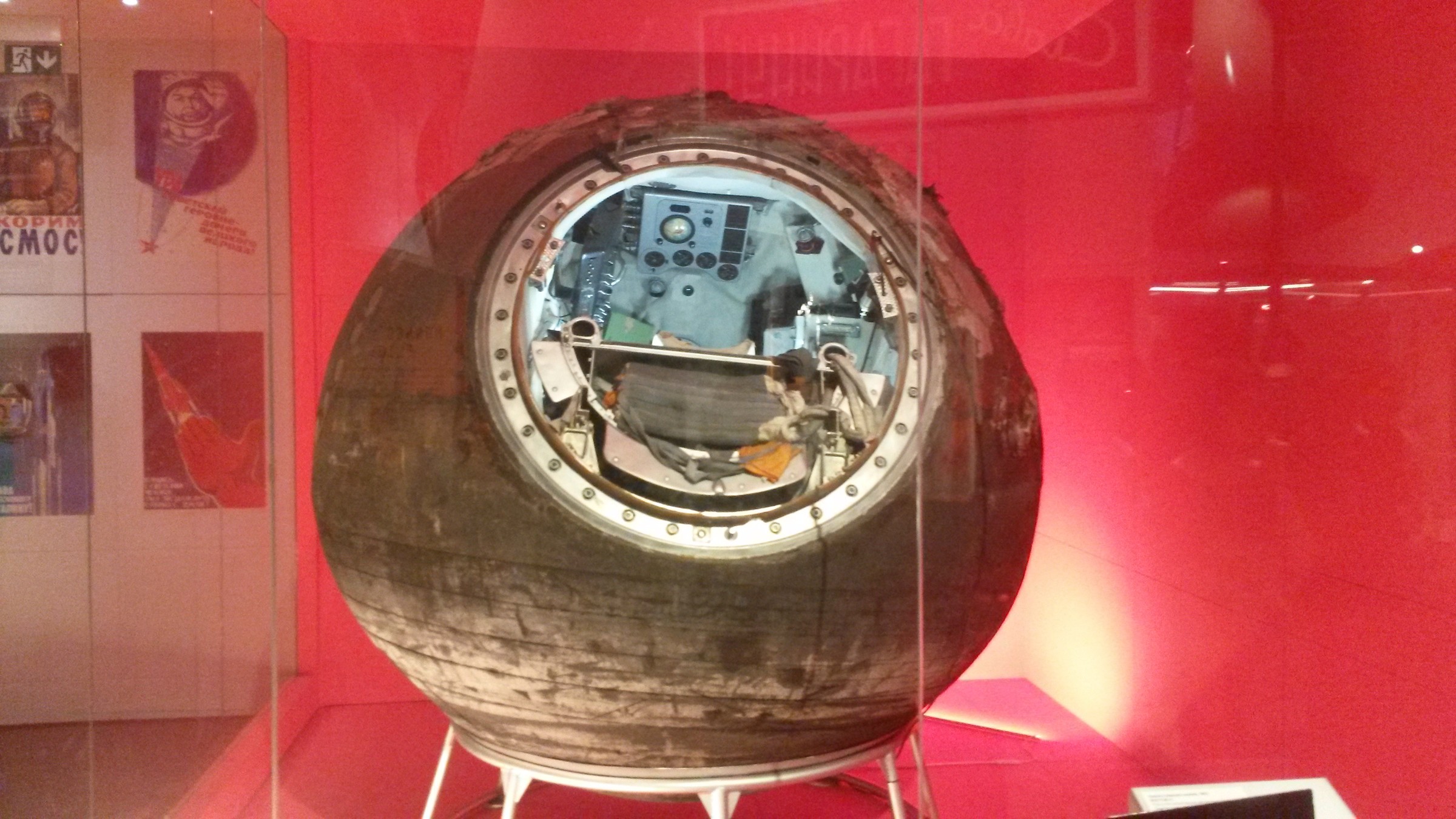
Valentina Tereshkova completed 48 orbits of Earth aboard Vostok 6, a flight that lifted off on 16 June 1963 and returned on 19 June 1963. Her time in space came to 2 days 22 hours 50 minutes, or about 71 hours. She was the first woman to fly in space.
That single flight ran about 17 hours longer than all six crewed flights of NASA's Project Mercury added together. NASA's own figures supply both sides of that comparison.
Forty-eight orbits from 16 to 19 June
A NASA history article published on 14 June 2013, "Sally Ride and Valentina Tereshkova: Changing the Course of Human Space Exploration", records that Vostok 6 launched on the morning of 16 June 1963 on a mission of 48 orbits around the Earth.
NASA's StarChild biography of Tereshkova gives the flight as 70.8 hours with 48 orbits. The duration of 2 days 22 hours 50 minutes is about 71 hours, close to that StarChild figure.
The two NASA sources match on the orbit count. Both place the flight in June 1963. Vostok 6 landed on 19 June 1963. Tereshkova remains identified in those accounts as the first woman in space.
Six Mercury flights, 53 hours 55 minutes 27 seconds
Project Mercury flew its six crewed missions between May 1961 and May 1963. NASA's Mercury Crewed Flights Summary lists six crewed flights flown by six astronauts. It gives their total flight time as 53 hours 55 minutes 27 seconds.
The six astronauts, in the order NASA lists them, were Alan B. Shepard Jr., Virgil I. Grissom, John H. Glenn Jr., M. Scott Carpenter, Walter M. Schirra and L. Gordon Cooper Jr.
The first two flights were suborbital. Shepard flew Freedom 7 on 5 May 1961 for 15 minutes 28 seconds. Grissom followed in Liberty Bell 7 on 21 July 1961, a flight of 15 minutes 37 seconds. His spacecraft sank after splashdown.
Orbital flight came next. Glenn flew Friendship 7 on 20 February 1962, making three orbits in 4 hours 55 minutes 23 seconds. He became the first American in orbit.
Carpenter flew Aurora 7 on 24 May 1962 for 4 hours 56 minutes 5 seconds.
Schirra flew Sigma 7 on 3 October 1962. NASA lists that flight at 9 hours 13 minutes 11 seconds and six orbits.
Cooper flew Faith 7 from 15 to 16 May 1963, completing 22 orbits in 34 hours 19 minutes 49 seconds. That flight, in May 1963, was the last of the six Mercury missions NASA records in the summary.
About 17 hours over the Mercury total
Set against NASA's figure of 53 hours 55 minutes 27 seconds for all six Mercury flights, Tereshkova's roughly 71 hours leaves a margin of about 17 hours. Using the StarChild figure of 70.8 hours gives the same rounded result.
The comparison applies only to the six Mercury flights as NASA lists them. It compares NASA's published total for six missions flown by six astronauts with one flight by one cosmonaut. Soviet flights other than Vostok 6 are outside its scope. So are American flights after Mercury.
The difference is given as about 17 hours, not as an exact figure. On one side is NASA's total of 53 hours 55 minutes 27 seconds. On the other is Tereshkova's duration of 2 days 22 hours 50 minutes, or about 71 hours. StarChild's 70.8 hours points the same way once the margin is rounded.
The Mercury summary gives orbit counts for three of the six flights. Glenn made three orbits, Schirra six and Cooper 22. Tereshkova's 48 orbits are the figure given by both the NASA history article and StarChild.
Faith 7, at 34 hours 19 minutes 49 seconds, was still in flight on 16 May 1963. Vostok 6 lifted off on 16 June 1963.
Astronautix has also covered Gherman Titov's day in orbit in August 1961, John Glenn's return to orbit at 77 36 years after Friendship 7, Sally Ride's flight as the first American woman in space in 1983, and the chimpanzee Ham's flight in a Mercury capsule in January 1961.