
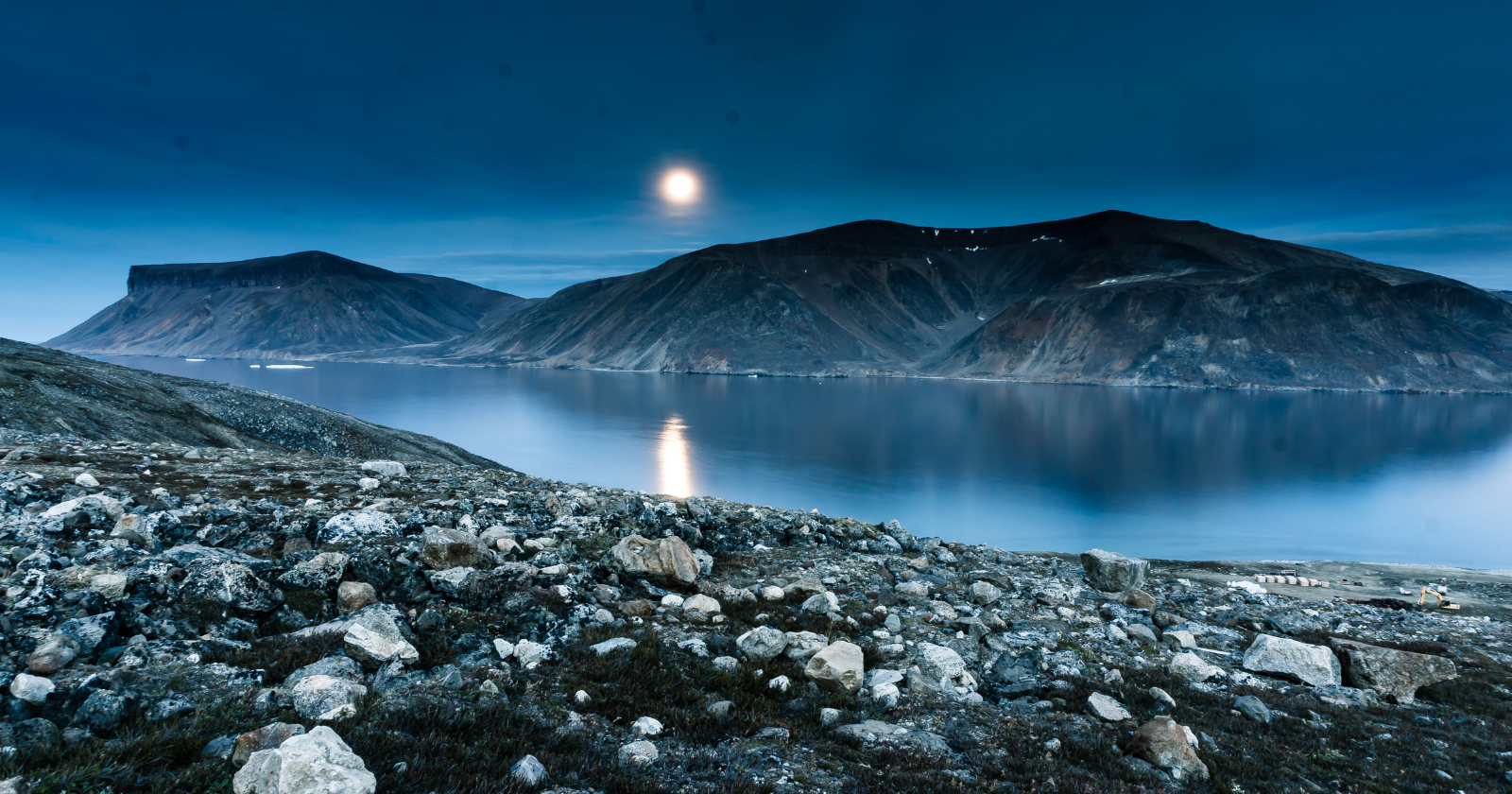
Ask planetary scientist Pascal Lee to describe Devon Island and he reels off a list: cold, dry, barren, rocky, wind-swept, scarred by craters. Then comes the punchline. "And that's exactly how you would describe Mars."
Lee has spent most summers since the late 1990s testing that claim. As principal investigator of the Haughton-Mars Project, he leads teams of researchers, engineers and students to a base camp on the rim of a crater in Nunavut, about 15 degrees of latitude from the North Pole. NASA still lists it as an active analogue mission.
An island made for comparison
Devon Island is usually described as the largest uninhabited island on Earth. It is a polar desert, with little snowfall, almost no plants and strong summer ultraviolet light. According to the Mars Institute, it holds the single largest continuous stretch of barren, rocky polar desert on the planet.
At its heart lies Haughton crater, roughly 23 kilometres across. It is thought to have been dug by an asteroid or comet about two kilometres wide, which struck what was then forested land.
What makes Haughton special is the combination. Plenty of craters sit in deserts, and plenty of deserts are cold. But Haughton is the only known impact structure on Earth set in a polar desert, which is close to the kind of place a Mars rover actually finds itself.
A crater that keeps changing its age
Even the crater's birthday has proved slippery. For years, Haughton was dated to about 23 million years ago, and that figure still appears on many websites.
In 2005, a team including Lee re-dated shocked rock from the crater and got a much older answer of about 39 million years. Then in 2021, a team including geologists at Curtin University in Australia combined two dating methods on shocked zircon and other minerals. They arrived at about 31.8 million years, and argued this resolved the earlier disagreement.
The number matters for more than trivia. Haughton is well preserved because the Arctic has kept it cold and dry, and how long it has survived tells scientists how slowly a cold, dry landscape wears down. That is exactly the kind of figure they need to read the ancient, battered craters of Mars.
Why the ground matters
The impact was violent enough to shatter rock to a depth of more than a kilometre and a half. Those once-solid rocks are now fractured and riddled with microbes living inside the cracks. On a planet where any life would probably hide underground or inside rock, that is a useful place to practise looking.
Devon also has frozen ground patterned into polygons and valleys carved by meltwater, features that have close cousins on Mars. Studying how they formed in the Arctic helps researchers judge which Martian landforms really need flowing water and which could form in the cold.
Lee's own fieldwork there fed into an idea he calls "Mars always cold, sometimes wet": that the planet may never have been warm and wet for long stretches, only briefly flushed by melting ice.
Base camp on the rim
The project began with a small pilot field party in the late 1990s. Its research station has stood in the northwest rim area of the crater since 2000, and crews now live there for weeks at a time.
The work is as much about people and machines as rocks. Teams have driven a modified Humvee rover across the island to rehearse long traverses, worn concept spacesuits, and tested a robotic drill. In 2024 and 2025, the Australian company Fleet Space deployed drilling and seismic sensing equipment there.
Devon is not entirely a NASA affair. On another stretch of the crater rim, the Mars Society runs its own station, the Flashline Mars Arctic Research Station, where crews in mock spacesuits simulate life on Mars. One crew stayed for four months in 2007, and the society reported completing another mission there in 2025.
Field life comes with very earthly hazards. Polar bears roam the island, so traverses go out with a guide on bear watch. In the project's first summer, Lee's team rented a local dog called Bruno as a watchdog.
Where Devon falls short
No place on Earth is truly Martian. Devon's average temperature is about −17°C, while Mars averages around −60°C. Mars has a thin carbon dioxide atmosphere, no breathable air and surface radiation that the Arctic never comes close to.
The streak of summers isn't unbroken either. In 2020, the pandemic kept researchers away from the island for the first time in 24 years.
What Devon offers is something no simulator can: real distance, real weather and real consequences. Fog closes in without warning, equipment breaks far from help, and the nearest town is a flight away. Lee has long argued that is the point. When humans finally go to Mars, he says, "they will train on Devon first."