
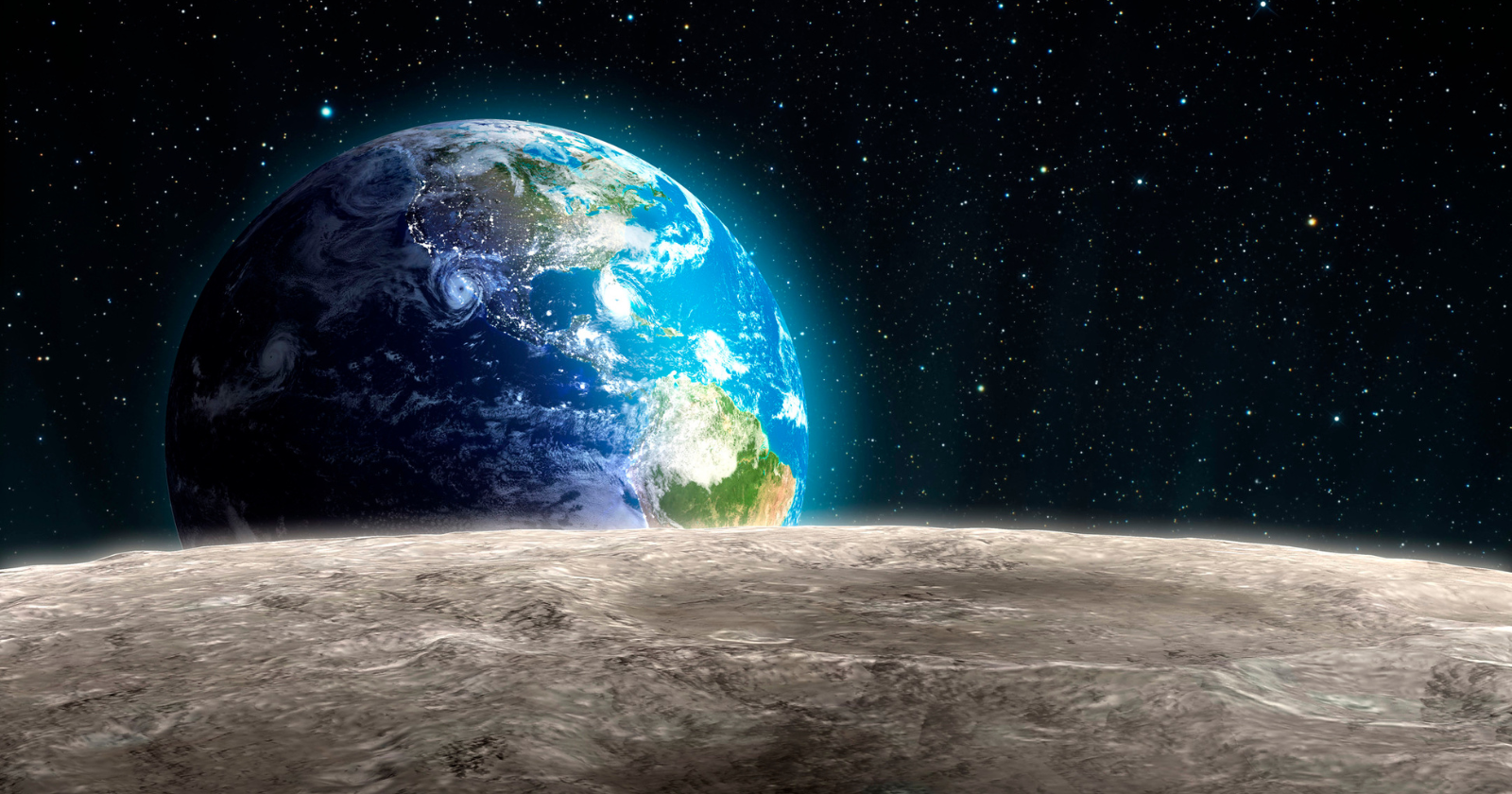
Every astronaut heading to the International Space Station has seen the pictures. They’ve watched the videos, heard colleagues describe the view and read about it in books. They know exactly what Earth looks like from orbit.
Then they look out of the window for themselves. Again and again, astronauts say that what they felt in that moment was something nobody had managed to prepare them for, however many times they had been told about it.
A feeling with a name
In 1987, the writer Frank White gave this experience a name: the overview effect. After interviewing many astronauts, he found that seeing Earth from space often left them with a profound new sense of the planet as a single, fragile home.
Apollo 14 astronaut Edgar Mitchell put it simply: “Something happens to you out there.” Astronauts describe being struck by the thinness of the atmosphere, the absence of visible borders and the sight of the whole planet hanging in darkness.
What the research found
In 2016, psychologist David Yaden and colleagues at the University of Pennsylvania published one of the first scientific studies of the overview effect. They analysed accounts from astronauts around the world, looking for common themes.
They found three that came up again and again: an overwhelming sense of beauty, unexpectedly strong emotion and a feeling of connection to other people and the planet as a whole. The researchers concluded that the overview effect is best understood as an intense form of awe, the feeling we get when we encounter something so vast that it forces us to rethink how we see the world.
Why being told isn’t enough
The most consistent part of these accounts is surprise. NASA astronaut Sam Durrance said that despite seeing photographs and hearing others describe it, nothing could prepare him for the real view. Kathryn Sullivan, the first American woman to walk in space, wrote that no amount of study or training could fully prepare anyone for the awe it inspires.
Psychologists who study awe say this fits a wider pattern. Awe tends to involve something too big to fit into what we already know. Being told that Earth looks beautiful and fragile is information. Seeing it with your own eyes, from 400 kilometres up, turns that information into something you feel.
Not everyone feels it
The overview effect isn’t guaranteed. Some astronauts describe the view in fairly matter-of-fact terms, and no study has measured how many experience it strongly. Some feel it in a single moment, while for others it builds over time.
There are also sceptics. Historian Jordan Bimm has argued that the overview effect is partly a story astronauts have learned to tell, shaped by expectations, publicity and a culture that discourages them from reporting negative reactions. Astronauts who have read about the overview effect before flying may be more likely to describe their experience in those terms.
Beyond Earth orbit
A few astronauts have seen something even larger. Apollo crews who flew to the Moon saw the entire Earth as a small disc they could cover with a thumb. Anthropologist Deana Weibel has used the term “ultraview effect” for the related experience of seeing the Milky Way and deep space from lunar orbit, based on her interviews with astronauts. One described it as something they were not ready for.
As private companies send more people into space and NASA prepares to return astronauts to the Moon, researchers are paying closer attention. Understanding the overview effect could help support astronauts’ wellbeing on long missions, and perhaps help people on the ground experience a little of the same awe.
What it leaves behind
For many astronauts, the feeling doesn’t stay at the window. Some have come home more focused on protecting the environment or on what humanity shares rather than what divides it. Frank White himself has said the lasting effect is usually subtle rather than dramatic, a quiet shift in perspective rather than a complete transformation.
That may be the most interesting part of the story. Astronauts are trained to expect almost everything, and many still return saying the view changed how they think about home. The planet they had studied all their lives turned out to be something they hadn’t fully understood until they saw it from the outside.