
On October 7, 1959, a small Soviet spacecraft swung behind the Moon. A photocell on its hull detected the bright lunar surface below, and a pair of camera doors opened. For the next 40 minutes, Luna 3 photographed a part of the Moon no human had ever seen.
The film inside the camera had an unlikely history. According to Soviet engineers, it had come from American spy balloons shot down over the USSR a few years earlier.
The side we never see
The Moon is tidally locked to Earth. It rotates once for every orbit, so the same face always points toward us. For all of human history, the far side had been a complete mystery.
Luna 3 launched on October 4, 1959, exactly two years after Sputnik 1. Its path took it around the back of the Moon at a distance of roughly 63,500 to 66,700 kilometers, perfectly placed to photograph the hidden side while it was lit by the Sun.
Film from the enemy
To take pictures in space, the Soviets needed film that could survive radiation and extreme temperatures. Igor Lisochkin, who led the imaging team, had doubts about the Soviet aerial film first chosen for the job.
An answer came from the United States. In early 1956, the US Air Force, Navy and CIA launched hundreds of camera-carrying balloons over the Soviet Union under a program called Genetrix. The balloons drifted at very high altitudes, photographing Soviet territory below, and their film was built to handle harsh conditions.
Many of the balloons came down in Soviet territory. Some were shot down by fighter pilots who discovered they dipped into range at dawn, after the night air had cooled them. According to The Space Review, the Soviets retrieved usable film from some of the downed balloons and found it suitable for Luna 3.
A darkroom in space
In 1959, there were no digital cameras. Any photo taken in space had to be developed somehow, and Luna 3 had no way to return its film to Earth.
So the spacecraft carried its own photo lab. Its imaging system, called Yenisey-2, combined a camera with two lenses, an automatic film processor and a scanner. Engineers reportedly nicknamed the processing compartment the “bath and laundry.”
After the photos were taken, the film was pulled through a thick developing fluid between sealed rubber gaskets, then into a dryer, as Damn Interesting describes. All of this happened inside a pressurized spacecraft tumbling through space.
Radioed home like a fax
Once the film was developed and dried, a cathode-ray tube shone a tiny spot of light through each negative, scanning it line by line. A light sensor recorded how much light passed through, and those signals were radioed to Earth, much like an old fax machine sending a document over a phone line.
It wasn’t easy. Early attempts to send the images, starting on October 8, failed because the signal was too weak. Luna 3 had to get closer to Earth before the transmissions worked.
Of the 29 photos taken, about 17 were successfully received by October 18, though some sources say 12. Contact with the spacecraft was lost a few days later.
What the pictures showed
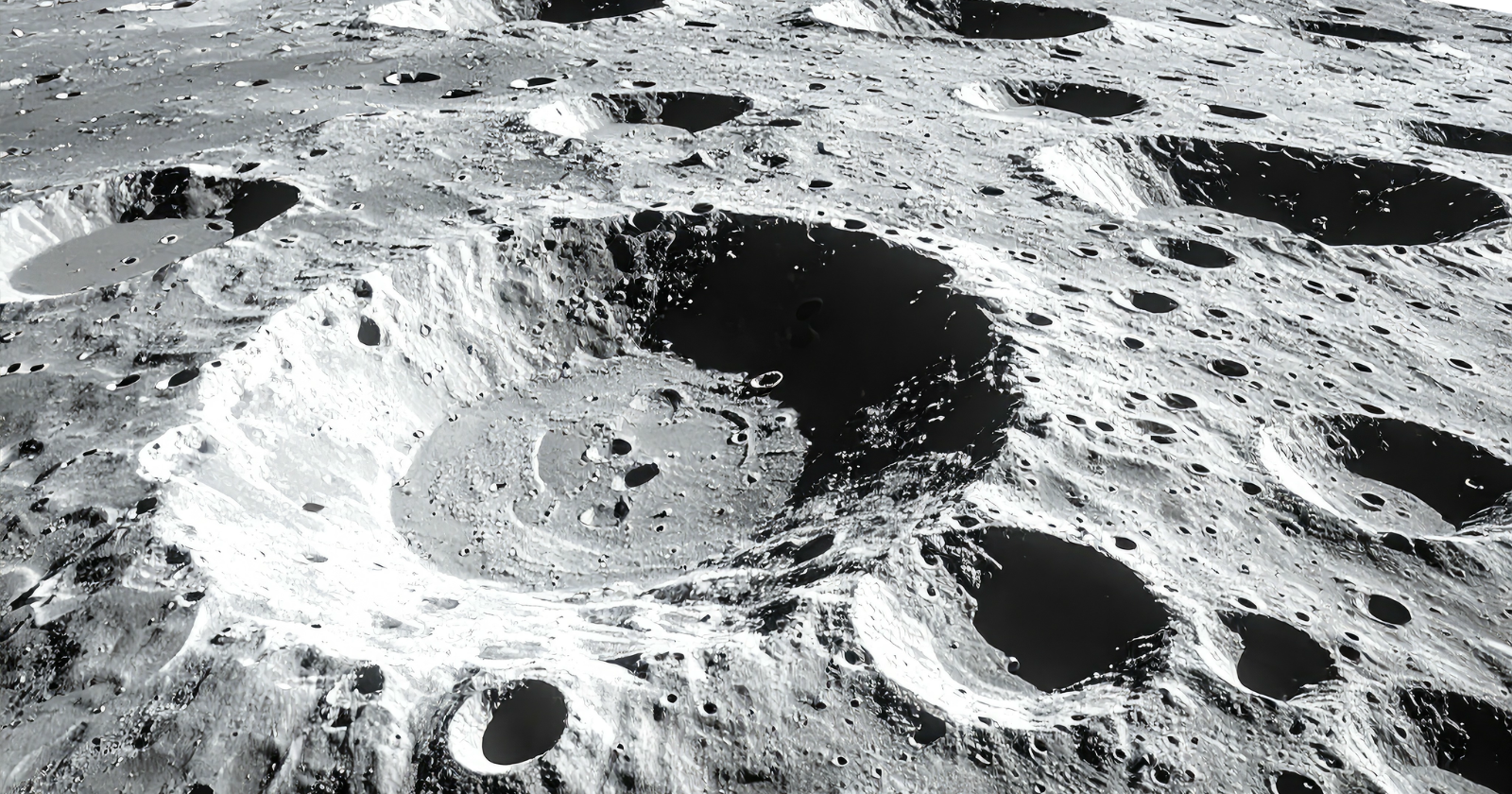
The images were grainy and noisy, but they were revolutionary. They covered about 70 percent of the far side and revealed a surprise. The near side is dotted with large, dark plains called maria. The far side has very few.
Instead, it’s dominated by rugged, heavily cratered highlands. Scientists are still studying why the two sides of the Moon are so different. Leading explanations involve differences in the thickness of the lunar crust.
The Soviet Union got to name some of the features it saw. Two of the most prominent are Mare Moscoviense, the Sea of Moscow, and a crater named after Russian space pioneer Konstantin Tsiolkovsky.
A short-lived solution
The onboard darkroom was a brilliant workaround, but it didn’t last. Later missions, like NASA’s Ranger probes, moved to video-style cameras. NASA’s Lunar Orbiter spacecraft in the mid-1960s still used onboard film processing, but produced far sharper images of the whole Moon.
Still, Luna 3 was the first. A spacecraft built during the Cold War used film made for spying on the Soviet Union to give humanity its first look at the Moon’s hidden face, developing the photos itself as it flew.