
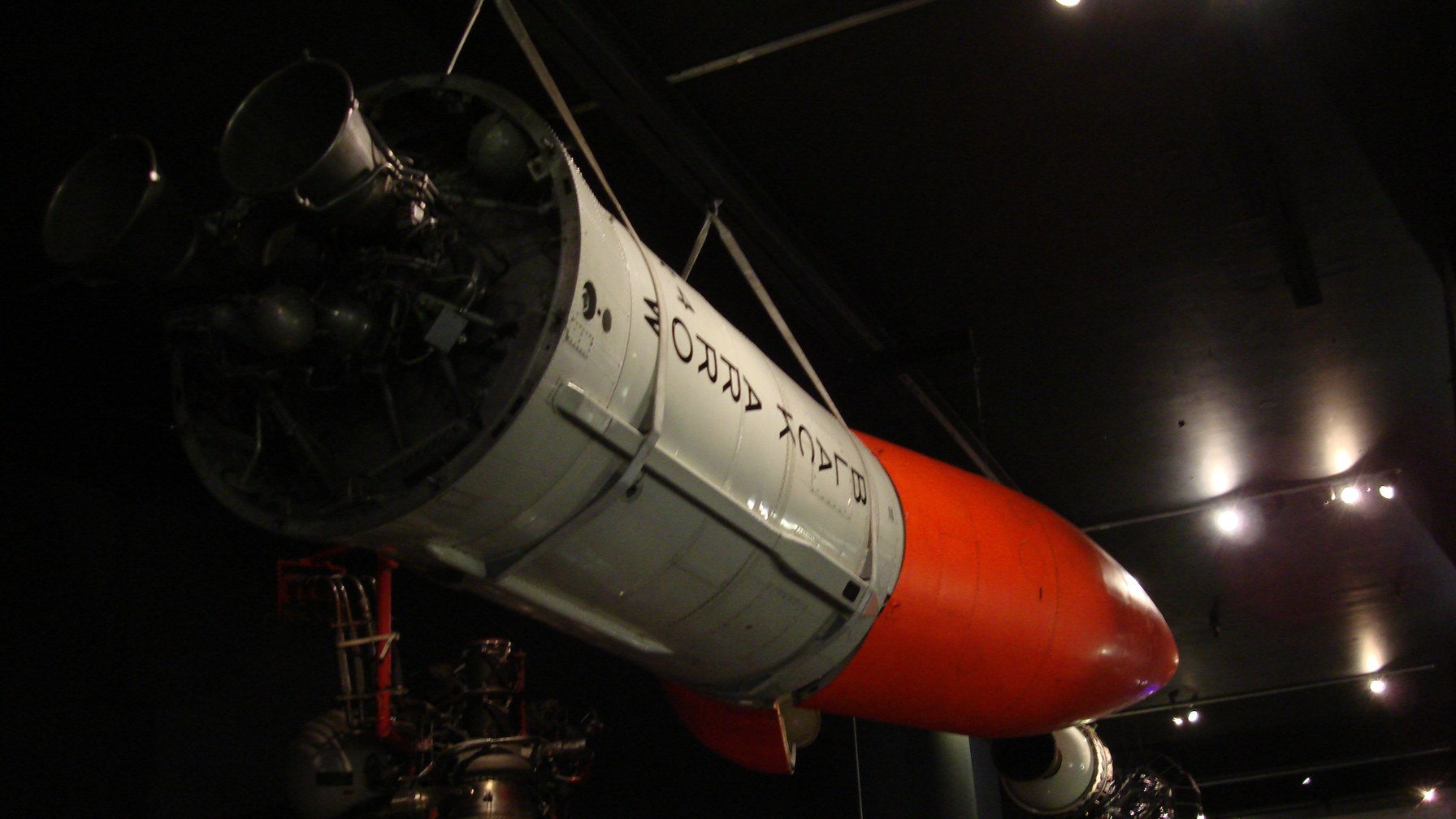
Fifty-five years ago today, at 04:09 GMT on 28 October 1971, a Black Arrow rocket lifted off from Launch Area 5B at Woomera in South Australia and placed a small British satellite called Prospero into low Earth orbit. It made the United Kingdom the sixth nation to put a satellite into orbit on a rocket it had developed itself. No British rocket has done it since.
By the time it flew, the programme had already been cancelled. On 29 July 1971 Frederick Corfield, Minister of State for Trade and Industry, told the House of Commons that Black Arrow would end. The Ministry of Defence had calculated that buying launches on the American Scout rocket, which could carry a similar payload, would be cheaper than continuing to build British launchers. Britain would concentrate on building satellites and put them on foreign rockets.
The rocket for the next flight, R3, was already in Australia; its second stage had arrived at the range three days before the announcement. Permission was given to launch it anyway.
A satellite renamed for the occasion
The satellite, built by the Royal Aircraft Establishment at Farnborough and also known as X-3, had been called Puck, after the sprite in A Midsummer Night's Dream. Once it was clear this would be the last launch on a British rocket, the team renamed it Prospero, after the sorcerer in The Tempest who gives up his powers at the end of the play.
Its job was modest: to test technology for future communications satellites. It carried two experimental solar cell arrangements, including a cover made with cerium oxide in place of the usual fused silica, along with trial telemetry and power systems and a detector for micrometeoroids.
Hit by its own rocket
The launch was not quite clean. The Waxwing solid motor on Black Arrow's third stage reached orbit too, and continued to thrust after separation. It ran into Prospero and knocked off one of the satellite's four radio antennae. The spacecraft still completed its mission.
Prospero's tape recorders stopped working in 1973. Ground stations kept in touch with it once a year, on the anniversary of the launch, for more than 25 years. It was formally deactivated in 1996, when the tracking station at Lasham in Hampshire closed. The satellite is still in orbit and is not expected to come down until around 2070.
What the cancellation cost
Before the decision, NASA had offered to launch British payloads free of charge. That offer was withdrawn after Black Arrow was cancelled. The launch facilities at Woomera were demolished within a year, and the next British satellite, X-4, which had been meant to fly on Black Arrow R4, went up on an American Scout from California in March 1974.
R4 itself never flew. The rocket is on display at the Science Museum in London, alongside the flight spare of Prospero.
Featured image: Black Arrow at the Science Museum, London. Photo by Oxyman via Wikimedia Commons, CC BY 2.5.