
Could a person still think straight in space? In 1961, nobody knew. Doctors worried that the crushing launch, minutes of weightlessness and the violence of re-entry might leave an astronaut confused, panicked or simply unable to use the controls.
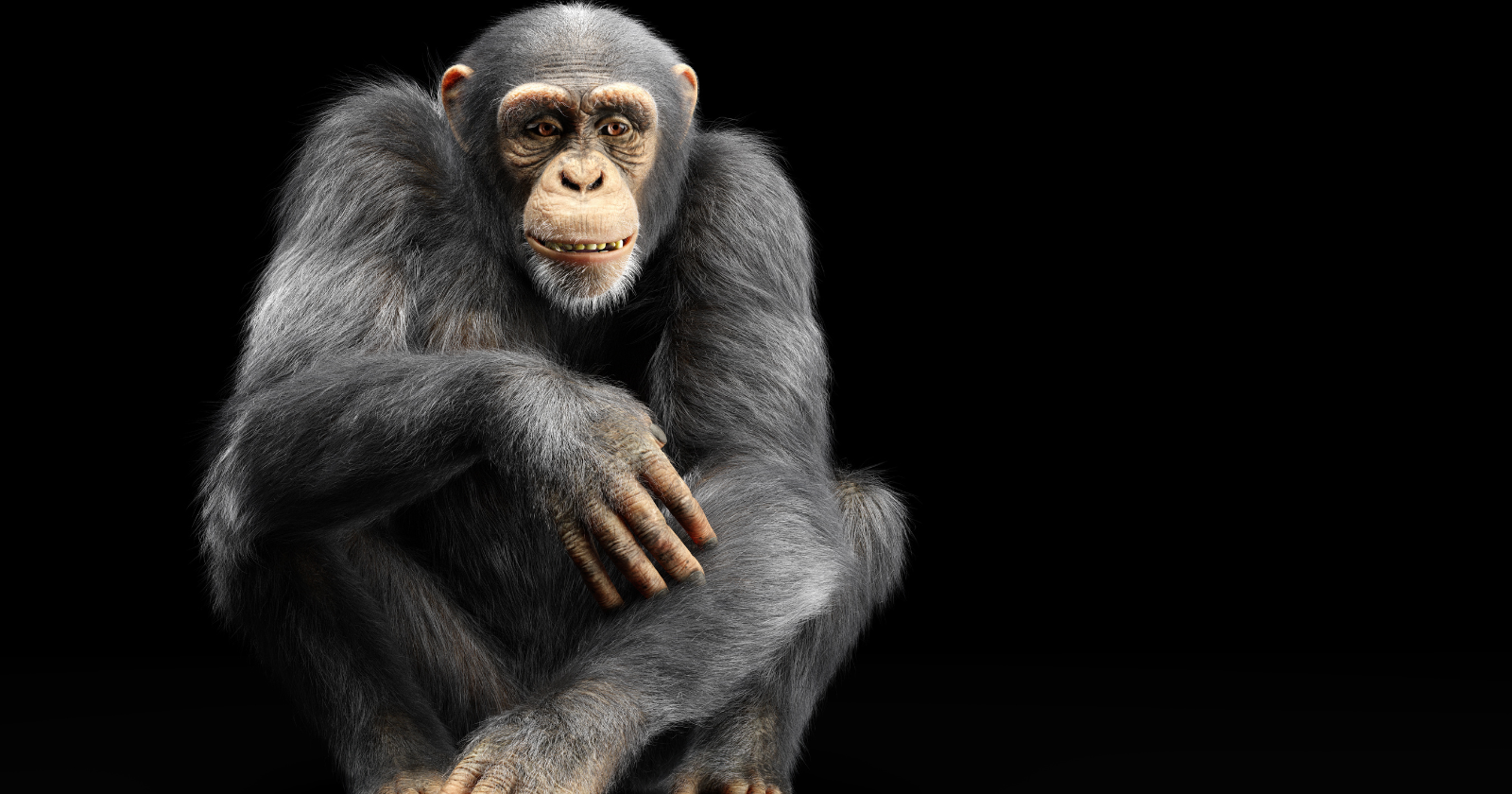
So before risking a human, NASA sent a three-year-old chimpanzee with a job to do.
He was born in July 1957 in what was then French Cameroon, and the US Air Force bought him for $457. In July 1959 he arrived at Holloman Air Force Base in New Mexico, where he was known as Chang, or simply No. 65.
His later name, Ham, came from the Holloman Aerospace Medical Center, the laboratory that prepared him.
Holloman started with 40 chimpanzee candidates. Over many months the group was whittled down to 18 and then to six, four females and two males. Ham was one of the finalists.
Lights, levers and banana pellets
The chimps were trained for a simple but demanding task. When a light came on in front of them, they had to pull the right lever within five seconds.
Get it right and a banana pellet dropped into reach. Get it wrong, or too slowly, and they felt a mild electric shock on the soles of their feet. Ham spent hundreds of hours on this over more than a year, including dozens of sessions in mock-ups of the Mercury capsule. The chimps were also put through simulated g-forces and weightlessness, much like the Mercury astronauts.
The idea was straightforward. If Ham could keep up the routine in space, there was good reason to think an astronaut could too.
He was picked for the flight the day before launch.
A flight that went too high
On 31 January 1961, Ham was strapped into a sealed, contoured couch inside Mercury capsule No. 5, on top of a Redstone rocket at Cape Canaveral. The plan was a gentle arc to a peak of about 185 kilometres, splashing down around 470 kilometres out in the Atlantic.
It did not go to plan. Within a minute of lift-off, the rocket was climbing at too steep an angle. It used up its fuel early, which set off the capsule's escape system and threw Ham higher and faster than anyone intended.
The capsule peaked at about 253 kilometres and reached roughly 9,400 kilometres an hour. Ham spent 6.6 minutes weightless. Coming back down, he took 14.7 g, nearly 3 g more than planned.
Through all of it, the lights kept coming on and Ham kept pulling levers.
How well did he do?
Remarkably well. His average reaction time on one of the lever tasks was 0.82 seconds, against 0.8 seconds in training on the ground. The full results were later published in NASA's report on the Mercury chimpanzee flights.
A difference of two hundredths of a second was the clearest early evidence that a primate brain could keep working through launch, weightlessness and re-entry. If a chimpanzee could do it, the case for a human pilot looked much stronger.
Rescued from a sinking capsule
The overshoot left Ham's capsule about 679 kilometres from the Cape, roughly 210 kilometres beyond the planned landing area and around 97 kilometres from the nearest recovery ship. A search plane spotted it 27 minutes after splashdown.
By then it was in trouble. The capsule had been damaged on landing and was taking on water. A Navy helicopter lifted it out and carried it to the ship, USS Donner.
When Ham was let out, he looked largely unbothered. He shook hands with the ship's commander and ate an apple and half an orange. From lift-off to splashdown, his flight had lasted 16 minutes and 39 seconds.
Why his flight changed the space race
Ham proved the capsule could keep a passenger alive. But the Redstone's overshoot worried its engineers, led by Wernher von Braun. Rather than put Alan Shepard on the next flight, they insisted on one more uncrewed test, flown in March 1961.
That test went well, but it cost time. On 12 April 1961, Yuri Gagarin orbited the Earth. Shepard did not fly until 5 May, in a capsule and on a rocket that Ham's flight had helped qualify for people. Some historians argue that without the extra test, an American might have reached space first.
A second chimpanzee, Enos, made the first American orbital flight with a primate on 29 November 1961, paving the way for John Glenn.
After the flight
Ham never flew again. He lived for more than two decades afterwards, at the National Zoo in Washington and later at the North Carolina Zoo, where he died on 19 January 1983, aged 25.
Most of his remains are buried at the New Mexico Museum of Space History in Alamogordo, near the base where he trained. His skeleton is kept at the National Museum of Health and Medicine in Maryland.
His grave marker sums up what those 0.82 seconds meant: "Ham proved that mankind could live and work in space."