
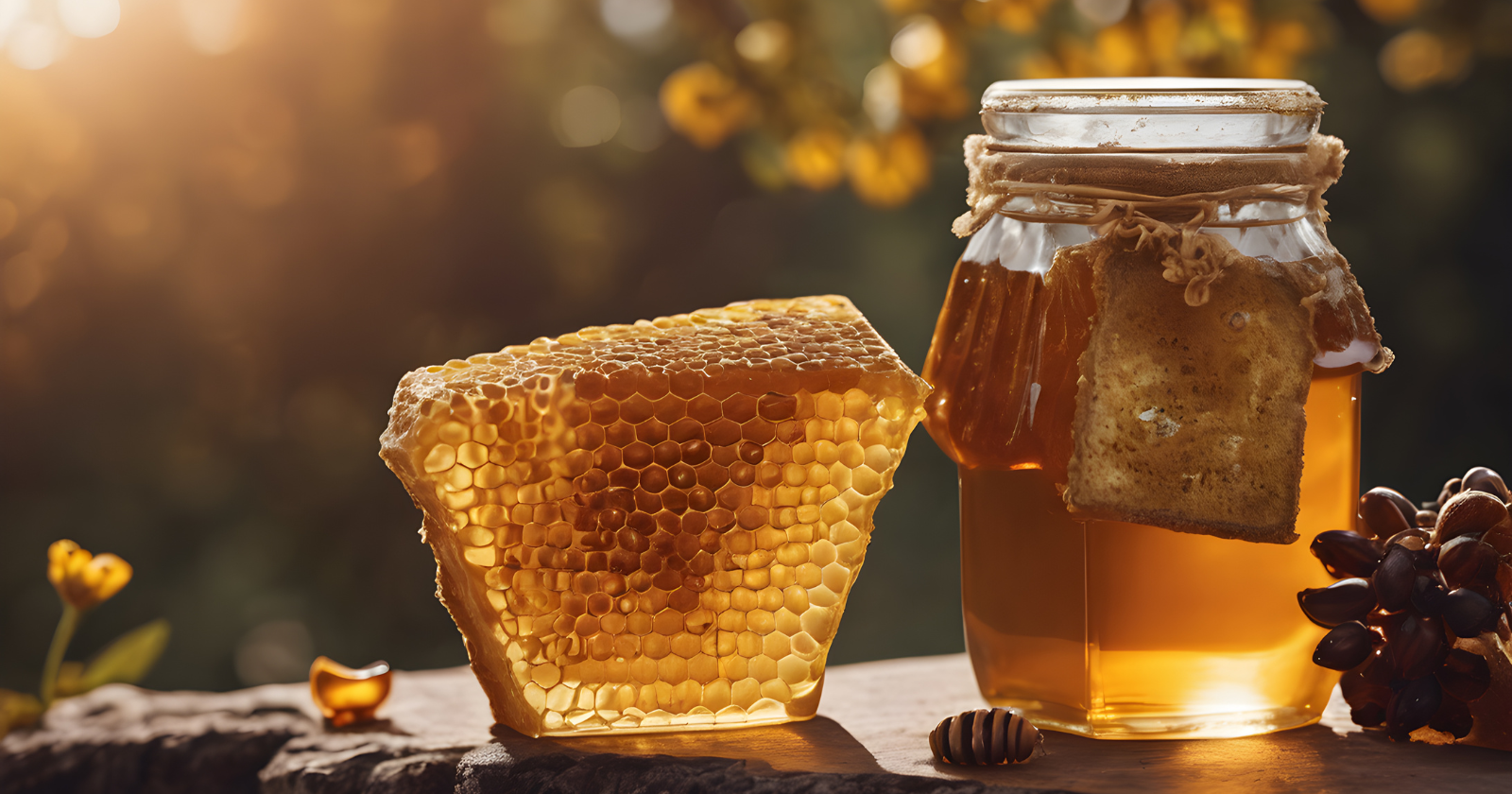
The ancient Egyptians didn’t send their dead into the afterlife empty-handed. Tombs were stocked with bread, meat, wine, oils and jars of honey, food meant to sustain the dead in the world to come.
Over thousands of years, most of that food crumbled, dried out or decayed. Honey is different. Left sealed in a dry tomb, it would not have rotted, thanks to a remarkable mix of chemistry that makes it one of the most hostile foods on Earth for microbes.
A famous story with no source
You may have heard that archaeologists opening Egyptian tombs found pots of honey thousands of years old, still good enough to eat. Some versions even claim someone tasted it.
It’s a great story, but no one has found proof that it happened. The tale is often linked to Tutankhamun’s tomb, yet there’s no record of edible honey being found or tasted there. In one famous case, a liquid from the tomb of Yuya and Thuya, once thought to be honey, was later identified by the chemist Alfred Lucas as castor oil.
The oldest honey ever found comes from a tomb in Georgia, where pipeline workers uncovered clay pots about 5,500 years old in 2003, according to reports on the find. What survived was a residue on the inside of the pots, identified by its pollen, not a jar of golden honey.
Too dry for life
Even if the tasting story is a myth, the science behind honey’s staying power is real. The first reason is water, or the lack of it.
Ripe honey is about 80 per cent sugar and only around 17 per cent water. Bees produce it by evaporating nectar, which starts out much wetter, fanning it with their wings until it thickens.
That leaves honey so concentrated that it pulls water out of anything that lands in it. Bacteria and fungi need water to survive. In honey, they lose it to the sugar around them and dry out, unable to grow or multiply.
Too acidic for most microbes
Honey is also surprisingly acidic, with a pH typically between about 3.2 and 4.5, similar to some fruit juices. Most bacteria grow best at a much more neutral pH.
Much of that acidity comes from the bees. As they process nectar, they add an enzyme called glucose oxidase, which turns some of the glucose into gluconic acid. The acid helps make honey an unwelcoming place for microbes.
The peroxide twist
The same enzyme also produces hydrogen peroxide, the antiseptic used in first aid kits. This is often cited as a key reason honey resists spoiling, but the real picture is more complicated.
Glucose oxidase works poorly in thick, acidic honey. It becomes active mainly when honey is diluted with water, which is when peroxide levels rise. Research by Kerstin Bang, Peter Molan and colleagues found that peroxide production depends strongly on how much honey is diluted. That helps explain why honey has long been used on wounds, where it mixes with moisture from the body, but it plays a smaller role in sealed honey sitting in a jar.
Not rotten, but not unchanged
Honey that doesn’t rot isn’t frozen in time. Over months and years, it slowly darkens, loses its aroma and often crystallises into a grainy solid as glucose separates out. It also builds up a compound called HMF as sugars break down.
After thousands of years, ancient honey would have changed a great deal. That’s one reason scientists are cautious about calling it edible, even if no microbes could grow in it. The seal matters too. Honey absorbs moisture from the air, and once it gets wet enough, yeasts can start to ferment it.
A lesson for your kitchen cupboard
For everyday honey, the lesson is simple: keep it sealed and dry. A jar with a tight lid in a cool, dry cupboard can last for years, even decades, without going bad. If it crystallises, gently warming the jar in a bowl of warm water will usually make it runny again.
There’s one important exception. Honey can contain the spores of the bacteria that cause botulism, which are harmless to adults but can be dangerous to babies. Health authorities advise that honey should not be given to children under one year old. For everyone else, a jar of honey is one of the few foods that can safely outlast almost everything else in the kitchen.