
On the morning of 30 June 1908, a farmer named Semyon Semenov was sitting on the porch of the trading post at Vanavara, in a remote part of central Siberia. It was just after 7am, and the vast forest around him was quiet.
Suddenly the sky to the north split open with fire. Semenov later said the heat was so intense that it felt as if his shirt was burning. Moments later, a tremendous blast threw him from his chair and several metres across the ground. The explosion was about 65 kilometres, or 40 miles, away.
A fireball over the taiga
Witnesses across a huge area described a bright fireball moving across the sky, followed by thunderous bangs. People hundreds of kilometres away felt the ground shake, windows broke and some were knocked off their feet.
Seismic stations across Europe and Asia recorded the shock, and air pressure changes were detected as far away as Britain. For several nights afterwards, skies over Europe were strangely bright, bright enough in some places to read a newspaper outdoors at midnight.
Flattening a forest
The explosion happened over the Podkamennaya Tunguska River in an area so remote that almost nobody lived there. It flattened trees across around 2,000 square kilometres, an area larger than Greater London. Scientists estimate that around 80 million trees were knocked down.
The trees fell in a striking radial pattern, all pointing away from the centre of the blast. Near the very centre, some trees were left standing but stripped of their branches, like telegraph poles, because the blast came from almost directly above.
No crater to be found
Because of the region’s remoteness and the turmoil of the First World War and Russian Revolution, it was almost 20 years before scientists reached the site. In 1927, the Soviet mineralogist Leonid Kulik led an expedition expecting to find a giant meteorite crater.
He found none. Instead, he saw the vast field of fallen trees and a swampy area at the centre. Kulik returned on several expeditions but never found a large meteorite or impact crater. It was one of the most puzzling mysteries of 20th-century science.
An explosion in the sky
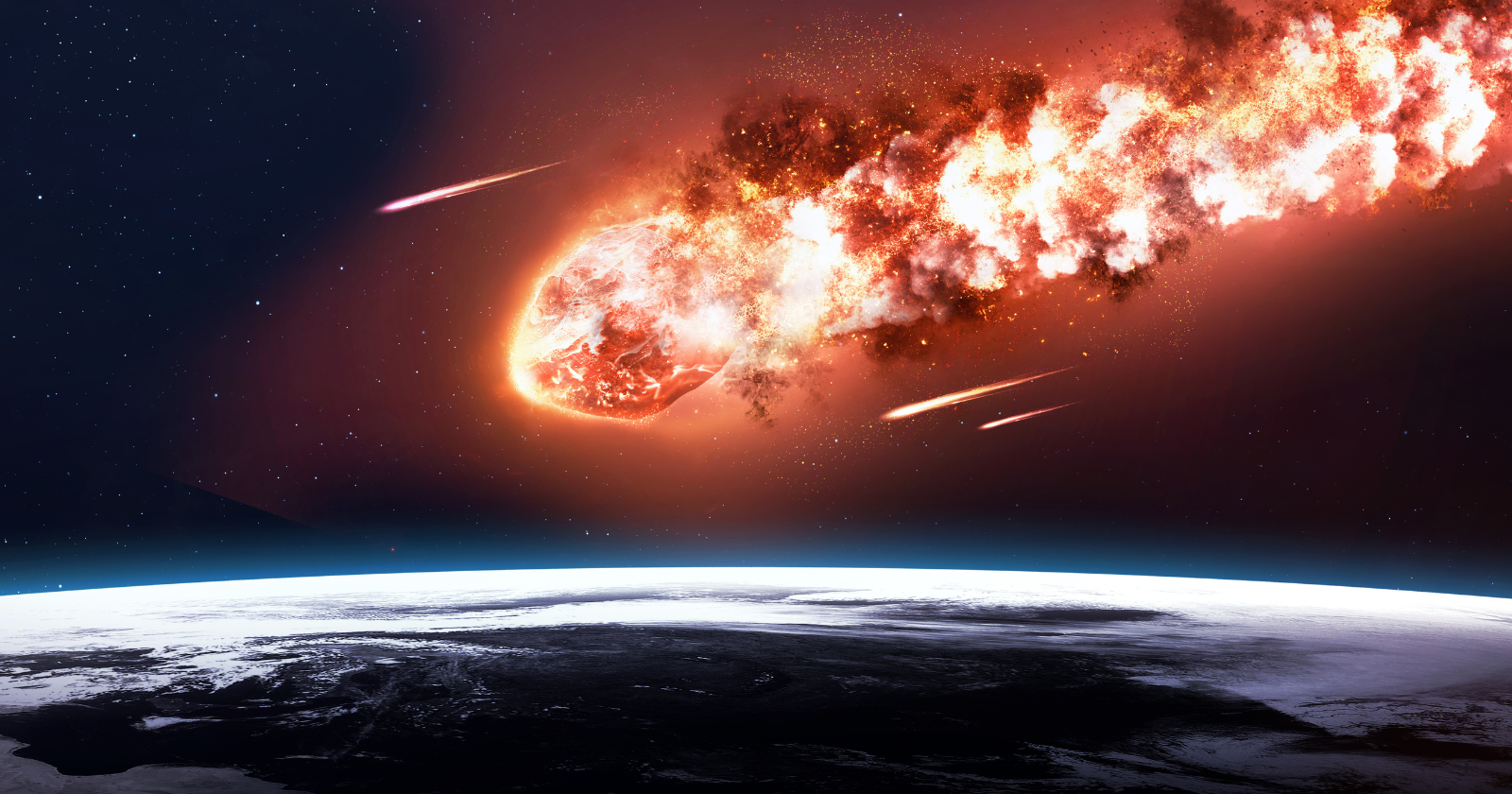
Most scientists now think the object was a stony asteroid or possibly a fragment of a comet, perhaps 50 to 60 metres across. As it plunged through the atmosphere at tens of thousands of kilometres per hour, intense pressure and heat made it break apart.
Around 5 to 10 kilometres above the ground, it exploded in what’s called an air burst. The energy released is estimated at between about 3 and 30 megatons of TNT, with many estimates around 10 to 15. That’s hundreds of times more powerful than the atomic bomb dropped on Hiroshima. The blast wave flattened the forest, but the object itself was largely destroyed before it reached the ground.
Still debated
Even today, details remain uncertain. Scientists continue to debate whether the object was an asteroid or a comet, exactly how large it was and how high it exploded. Tiny particles found in tree resin and soil at the site may come from the object, but the evidence is limited.
Over the years, the mystery also attracted far-fetched theories, from black holes to crashed alien spacecraft. There’s no scientific evidence for any of them.
A warning from the past
The Tunguska event is the largest impact in recorded history. If an object of the same size exploded over a city today, the damage could be catastrophic.
That’s one reason space agencies now track near-Earth asteroids. In 2022, NASA’s DART mission deliberately crashed a spacecraft into a small asteroid and successfully changed its orbit, showing that it may one day be possible to deflect a dangerous object. The anniversary of the Tunguska explosion, 30 June, is now marked each year as International Asteroid Day.