
On the afternoon of November 30, 1954, Ann Hodges was feeling unwell. The 34-year-old was resting on the couch in her living room in Oak Grove, near Sylacauga, Alabama, wrapped in quilts, while her mother was elsewhere in the house.
Outside, people across the region were noticing something strange in the sky: a bright streak, followed by loud bangs some described as sounding like explosions. Moments later, a dark rock about the size of a grapefruit burst through the Hodges’ roof, smashed through the ceiling, bounced off a big wooden console radio and slammed into Ann’s hip.
A rock from the sky
At first, nobody knew what had happened. Hodges woke up in pain to a room full of dust and a hole in the ceiling. The family assumed a chimney had collapsed, or that a plane had crashed, or perhaps that someone had thrown something through the roof.
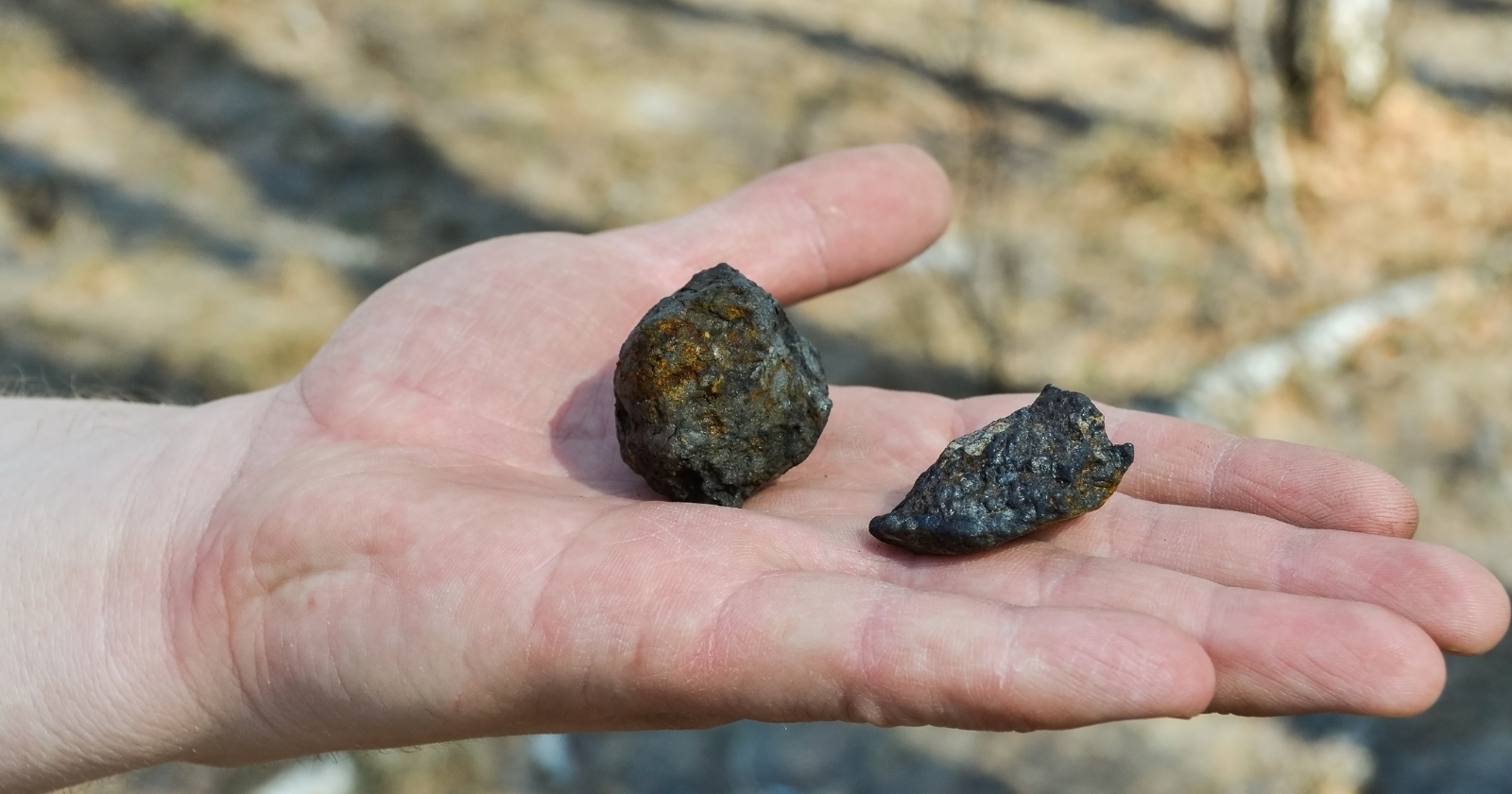
A geologist working nearby was called in and identified the object as a meteorite. It weighed about 8.5 pounds (3.9 kilograms) and was about seven inches long. It was later classified as an ordinary chondrite, the most common type of stony meteorite.
Ann wasn’t seriously hurt, though she was left with a huge, dark bruise along her side and hip. The radio had likely taken some of the force of the impact. A photo of the bruise, shown off by her doctor, ended up in Life magazine.
The first confirmed strike
Meteorites fall to Earth all the time, but most land in oceans, deserts or empty fields. Throughout history there had been reports of people being hit, but none were well documented. Ann Hodges’ case was different. There was a witness, a fragment, a damaged house and a medical record of the injury.
That combination made her the first person known for certain to have been struck by a meteorite. Since then, only a handful of similar cases have been reliably confirmed, usually involving small fragments that cause little or no harm.
A fight over who owned it
The meteorite quickly became a source of trouble. First, the local police took it, and it was handed over to the US Air Force for examination before being returned. Then came a legal dispute.
The Hodges family rented their house. Their landlady, Birdie Guy, argued that because the rock had landed on her property, it belonged to her. She hoped to sell it to help pay for the damage to her roof. Public opinion was strongly on Ann’s side. As she famously told reporters, “I think God intended it for me. After all, it hit me!”
The case was eventually settled, and the Hodges family paid Guy $500 to drop her claim. By then, though, the media frenzy had died down, and the large offers the family had expected to receive never came.
A second fragment, a happier ending
The rock that hit Ann wasn’t the only piece of that meteor. As it streaked through the atmosphere, the space rock broke apart into at least three fragments.
The day after Ann was hit, a local farmer named Julius McKinney found another fragment in a dirt road near his home. Unlike the Hodges family, he managed to sell his piece fairly quickly. He reportedly earned enough to buy a small farm and a used car. His fragment was later acquired by the Smithsonian Institution.
Fame that didn’t suit her
Ann Hodges was a quiet, private person, and the attention took a toll. Reporters, curious visitors and strangers descended on the family home. A staff member at the Alabama Museum of Natural History later described her as someone who didn’t like the notoriety at all.
In 1956, worn down by the publicity and the legal battle, the Hodges family donated the meteorite to the Alabama Museum of Natural History at the University of Alabama in Tuscaloosa. Ann’s health declined in the following years. She died in 1972.
Where it is today
The Hodges meteorite is still on display at the Alabama Museum of Natural History, where visitors can see the rock that made history. Decades later, the family also loaned the radio it bounced off to the American Museum of Natural History in New York.
The story is a reminder that space isn’t as far away as it seems. Every day, tons of material from asteroids and comets fall toward Earth, most of it burning up as dust or shooting stars. Very rarely, a piece survives the trip, and even more rarely, it finds a person. On one quiet afternoon in 1954, it found Ann Hodges, napping on her couch in Alabama.