
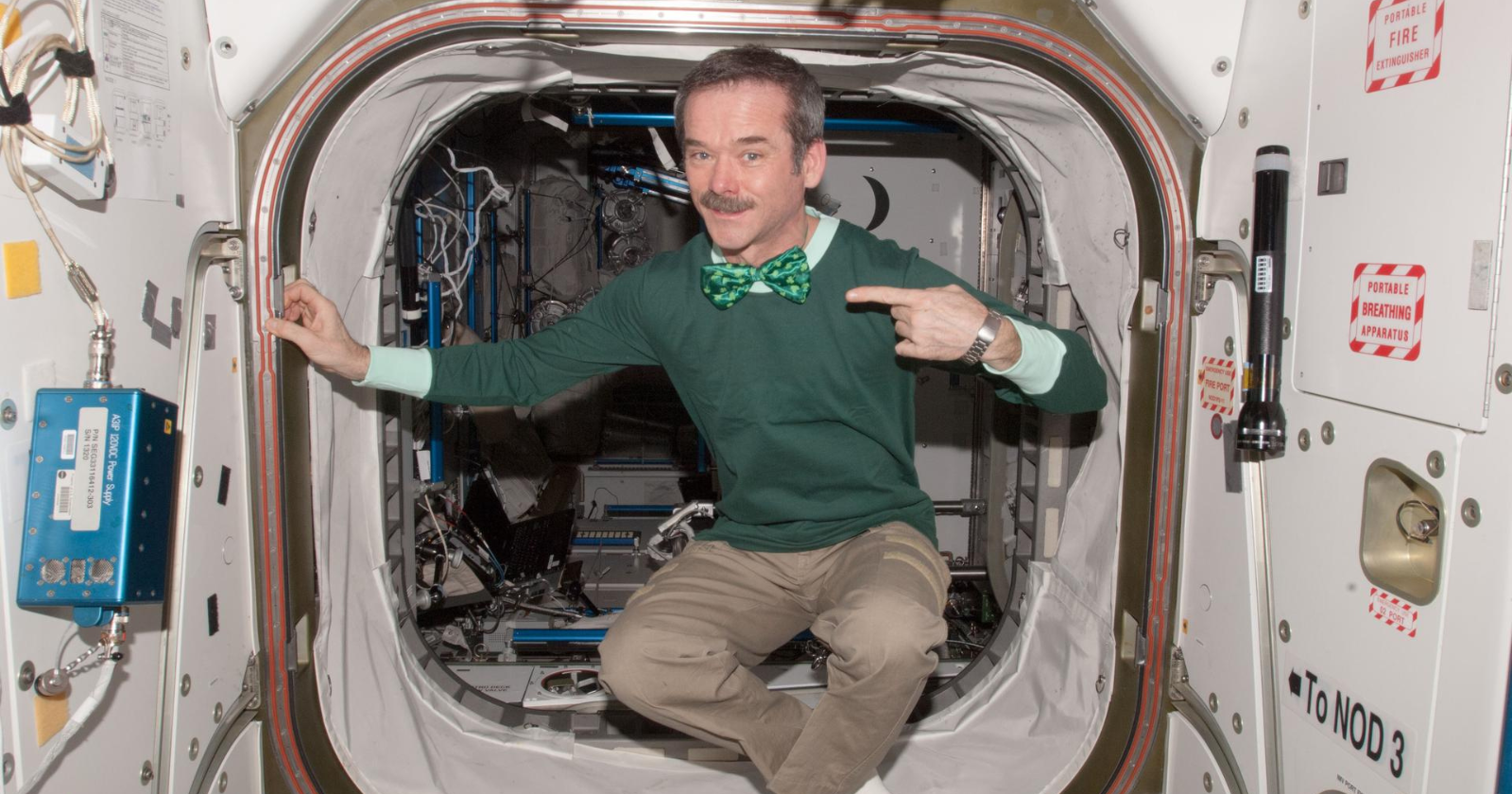
On May 14, 2013, a Soyuz capsule thumped down onto the steppe of Kazakhstan. Inside was Canadian astronaut Chris Hadfield, who had just spent nearly five months in orbit, most of it as the first Canadian to command the International Space Station.
He was famous by then. His videos from orbit, including a version of David Bowie’s “Space Oddity” sung while floating in the station, had been watched by millions. But in the days after landing, one of the most memorable things he said had nothing to do with music or views of Earth. It was about his mouth.
Learning to talk all over again
At a press conference two days after his return, Hadfield described what happened right after landing. He said that he could feel the weight of his lips and tongue and had to change how he was talking.
Without realizing it, he explained, he had learned to talk with a weightless tongue. For months, the muscles of his mouth had been working in an environment where the tongue and lips weighed nothing. Back on Earth, gravity was suddenly pulling them down again, and his speech had to catch up.
It’s a strange idea. Most of us never think about the weight of our own tongue. But speaking is one of the most finely controlled things the human body does, and it turns out to be tuned to gravity too.
A whole body readjusting
Hadfield’s mouth was only one part of a much bigger adjustment. After 146 days in space, his body had settled into what he called a whole new normal.
His neck and back ached from holding up his head again after five months of floating. He felt dizzy and had to sit down in the shower so he wouldn’t faint. His feet had lost their calluses, so walking felt, in his words, like walking on hot coals. He wore a special compression garment to help push blood up from his legs, because his body hadn’t yet relearned how to keep blood pressure steady when standing.
These effects are well known to space agencies. In microgravity, bones can lose around 1 percent of their density per month, muscles weaken, and the heart and blood vessels adapt to a world without “up” or “down.” Coming home means reversing all of that.
Why the tongue gets confused
On Earth, gravity tugs constantly on every part of the body, including the tongue and lips. Our brains learn to account for that pull automatically. When we speak, the muscles that lift the tongue toward the roof of the mouth are working against gravity, and the brain’s motor control systems quietly calibrate for it.
In orbit, that pull disappears. Over weeks and months, the brain recalibrates. Movements that once needed effort now need less, and the body adjusts its fine motor control to match. Back on Earth, the old settings no longer fit. Until the brain recalibrates again, the tongue can feel heavy and clumsy, and speech can feel slightly off.
This reaches well beyond the tongue. Returning astronauts often describe having to think about movements that used to be automatic, from walking in a straight line to setting objects down instead of letting go of them midair.
A comment that launched a study
Hadfield’s offhand remark caught the attention of linguists at the University of British Columbia. Professor Bryan Gick heard about it shortly after Hadfield landed and began planning research into how gravity affects speech. It took several years, but in 2019 he and doctoral student Arian Shamei published a pilot study.
They used NASA audio recordings of astronaut Mark Kelly from the 2011 space shuttle mission STS-134, measuring the sound of his vowels before, during and after the flight. After the mission, his vowels shifted as though his tongue were effectively heavier on his return from space. Sounds that require lifting the tongue upward were affected most, which is what you’d expect if gravity is the culprit.
It was a small study, based on one astronaut, and the researchers called it a starting point. But it supported what Hadfield had felt.
Why it matters for future missions
A slightly clumsy tongue might sound like a minor problem, but the researchers point out the timing. The biggest changes in gravity happen during launch, landing, and arrival at a new world. Those are also the moments when clear spoken communication can matter most.
Future missions to the Moon and Mars will put astronauts through even more transitions: months of weightlessness, then partial gravity on another world, then weightlessness again and finally full Earth gravity. Understanding how the body and brain cope with each shift, down to the fine control of speech, will help keep crews safe.
Back on solid ground
Hadfield recovered over the following weeks, as most astronauts do. His speech returned to normal, his balance improved and his feet toughened up again. He retired from the Canadian Space Agency shortly afterward.
But his comment about the weight of his tongue has stuck with people because it captures something easy to forget. Gravity isn’t just something that keeps us on the ground. It shapes every movement we make, even the ones we’ve never noticed.