
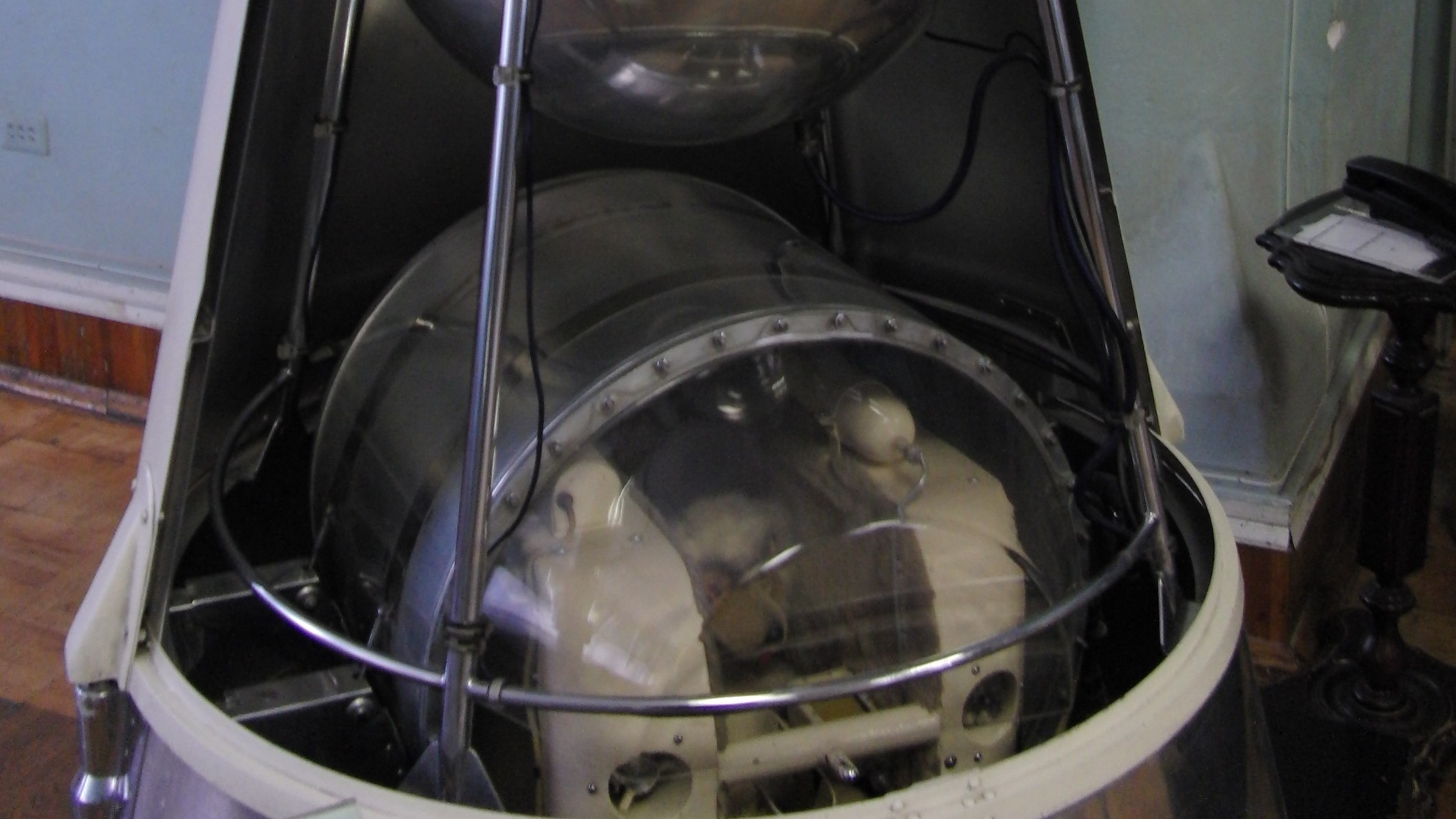
Sputnik 2 lifted off on 3 November 1957, 69 years ago yesterday. On board was Laika, a stray dog of about three years old taken from the streets of Moscow. She weighed 5 to 6 kg. She became the first animal to orbit the Earth.
The flight was rushed. Nikita Khrushchev wanted a launch to mark the 40th anniversary of the October Revolution. The decision was taken around 10 to 12 October, leaving engineers less than four weeks to build the craft. No return to Earth was planned. Laika's death was certain from the start.
A flight with no way home
The cabin carried food for seven days. The plan was for her last meal to be poisoned. Before the flight, Vladimir Yazdovsky, one of the scientists on the programme, took her home to play with his children.
Sensors showed her heart rate climb from 103 beats a minute before launch to 240 during the ascent. Once in orbit, part of the rocket's Block A core failed to separate. The thermal control system could not cope and the cabin reached about 40C. No signs of life were recorded after five to seven hours. She was dead by the fourth orbit.
The official story
For years Soviet sources said Laika had died painlessly, either from lack of oxygen when her air ran out or by planned euthanasia, after days in orbit. The truth came out in October 2002, when Dimitri Malashenkov of the Institute for Biological Problems in Moscow told the World Space Congress in Houston that she had died of overheating within hours.
Oleg Gazenko, one of the scientists who prepared her, spoke about the mission in 1998. "We did not learn enough from this mission to justify the death of the dog," he said. Sputnik 2 stayed in orbit for another five months. It burned up on reentry on 14 April 1958, after 2,570 orbits.