Viking
Spacecraft · USA
Original archive entry. The text, images and links below are kept as they were written.

Credit: NASA
American Mars lander. First successful soft landings made at two locations on the Martian surface and returned the first images from the surface. Launched 1975.
The orbiters extensively mapped the surface of the planet. Viking was designed to orbit Mars and to land and operate on the planet's surface. Two identical spacecraft, each consisting of a lander and an orbiter, were built. These spacecraft were launched from Cape Canaveral, Florida in 1975. They spent nearly a year cruising to Mars. Viking 1 reached Mars orbit June 19, 1976, and Viking 2 began orbiting August 7, 1976. Viking 1 landed on Mars July 20, 1976 on the western slope of Chryse Planitia (the Plains of Gold) at 22.3 deg N latitude, 48 deg longitude.
More at: Viking.
Subtopics
- Viking-DS (VDS) Null
Related
- Family
- Mars lander
- Country
- USA
- Engines
- RS-2101
- Launch Vehicles
- Titan, Mars tactical rocket, Titan IIIE
- Projects
- Mars
- Launch Sites
- Cape Canaveral, Cape Canaveral LC41
- Agency
- NASA
Photo Gallery
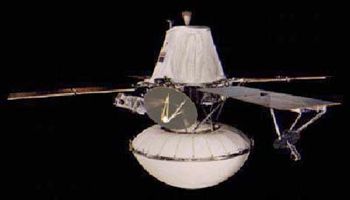
Viking 1 Lander
Credit: Manufacturer Image
Viking
Credit: Manufacturer Image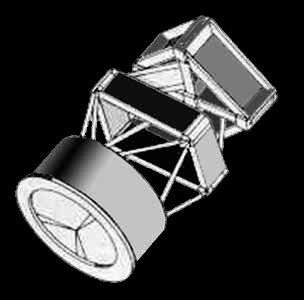
Viking-DS
Credit: Manufacturer Image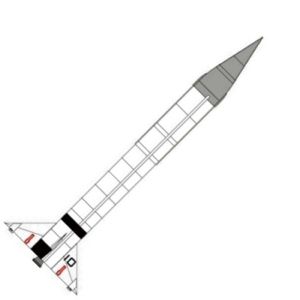
Viking 10
Credit: © Thomas Kladiva - Thomas Kladiva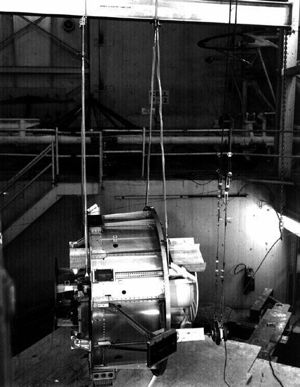
Viking Test Seq 02 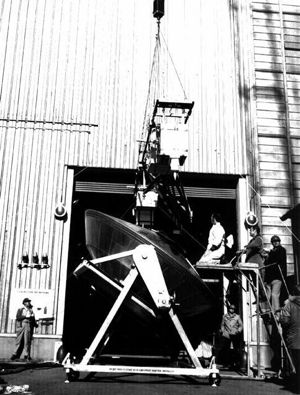
Viking Test Seq 06 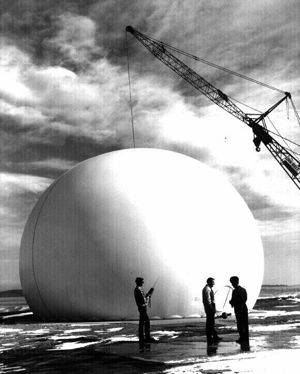
Viking Test Seq 05 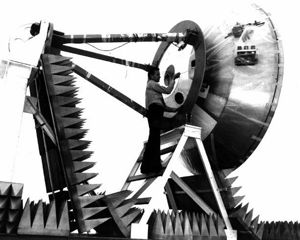
Viking Test Seq 03 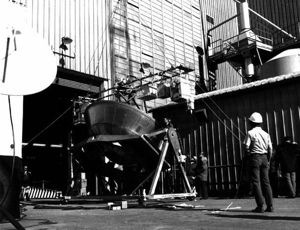
Viking Test Seq 01 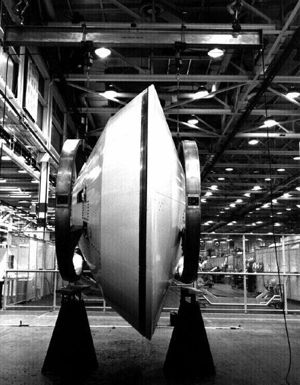
Viking Test Seq 07 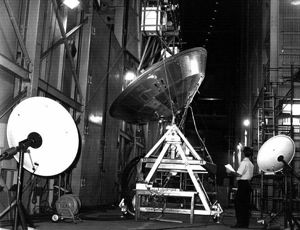
Viking Test Seq 08 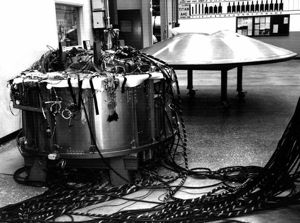
Viking Test Seq 04


Chronology
9 events
1966 January 16
- Objectives in lunar and planetary exploration for the 1970-1985 - .
Nation: USA.
Program: Skylab.
Spacecraft: Viking.
National Academy of Sciences report outlining research objectives in lunar and planetary exploration for the 1970s and early 1980s. The Space Science Board of the National Academy of Sciences issued a report outlining research objectives in lunar and planetary exploration for the 1970s and early 1980s. The report affirmed earlier recommendations by the Space Science Board to NASA that unmanned exploration of Mars should have first priority in the post- Apollo space era. Secondary importance was assigned to detailed investigation of the lunar surface and to unmanned Venus probes. Clearly, the report reflected a predominant mood within the scientific community that scientific research in space take predominance over manned programs whose chief objectives, said the report, were 'other than scientific.' Additional Details: here....
1970 March 25
LV Family: Titan. Launch Vehicle: Titan IIIE.- Titan Ill/Centaur for Viking. - .
Spacecraft: Viking.
SAMSO and NASA signed a Memorandum of Understanding that defined the roles and responsibilities for a Titan Ill/Centaur coordinating group which would acquire Titan III launch vehicles for Viking. SAMSO and NASA signed a Memorandum of Understanding that defined the roles and responsibilities for a Titan Ill/Centaur coordinating group which would acquire Titan III launch vehicles for Viking.
1974 February 11
13:48 GMT - . Launch Site: Cape Canaveral. Launch Complex: Cape Canaveral LC41. LV Family: Titan. Launch Vehicle: Titan IIIE. FAILURE: Centaur LOX pump failure..- Viking Dynamic Simulator - .
Payload: VDS. Mass: 3,399 kg (7,493 lb). Nation: USA.
Agency: USAF.
Spacecraft: Viking.
The newest addition to the Titan III series, the Titan IIIE/Centaur - a meld of Air Force and NASA technology, suffered a partial failure in its first flight test from Cape Canaveral. The Titan/Centaur vehicle will be used as the launch vehicles for NASA's Viking Mars Lander in 1975 and for the United States-German Helios program.
1975 August 20
21:22 GMT - . Launch Site: Cape Canaveral. Launch Complex: Cape Canaveral LC41. LV Family: Titan. Launch Vehicle: Titan IIIE.- Viking 1 Orbiter - .
Payload: Viking 1. Mass: 3,399 kg (7,493 lb). Nation: USA.
Agency: JPL.
Class: Mars.
Type: Mars probe. Spacecraft: Viking.
USAF Sat Cat: 8108 . COSPAR: 1975-075A.
A Titan HIE carrying a Viking payload was successfully launched from LC-41, Eastern Test Range. This was the first flight of a new oxydizer accumulator developed for the HIE. Combined Mars orbiter and lander mission; orbiter inserted in Mars orbit 6/19/76; lander soft landed on Martian surface 7/20/76Mars. Mars Orbit. Spacecraft engaged in research and exploration of the upper atmosphere or outer space (US Cat B).
- Viking 1 Lander - .
Payload: Viking 1. Nation: USA.
Agency: NASA Langley.
Class: Mars.
Type: Mars probe. Spacecraft: Viking.
Decay Date: 1976-07-20 . USAF Sat Cat: 9024 . COSPAR: 1975-075C.
A Titan HIE carrying a Viking payload was successfully launched from LC-41, Eastern Test Range. This was the first flight of a new oxydizer accumulator developed for the HIE. Spacecraft engaged in research and exploration of the upper atmosphere or outer space (US Cat B).
1975 September 9
18:39 GMT - . Launch Site: Cape Canaveral. Launch Complex: Cape Canaveral LC41. LV Family: Titan. Launch Vehicle: Titan IIIE.- Viking 2 Orbiter - .
Mass: 3,399 kg (7,493 lb). Nation: USA.
Agency: JPL.
Class: Mars.
Type: Mars probe. Spacecraft: Viking.
USAF Sat Cat: 8199 . COSPAR: 1975-083A.
A Titan HIE carrying a Viking payload was successfully launched from LC-41, Eastern Test Range. This was the first flight of a new Command Receiver Set. A fire occurred at the launch site following launch and caused $2 million damage to the Aerospace Ground Equipment building. Combined Mars orbiter and lander mission; orbiter inserted in Mars orbit 8/7/76; lander soft landed on Martian surface 9/3/76Mars. Mars Orbit. Spacecraft engaged in research and exploration of the upper atmosphere or outer space (US Cat B).
- Viking 2 Lander - .
Nation: USA.
Agency: NASA Langley.
Class: Mars.
Type: Mars probe. Spacecraft: Viking.
Decay Date: 1976-08-31 . USAF Sat Cat: 9408 . COSPAR: 1975-083C.
A Titan HIE carrying a Viking payload was successfully launched from LC-41, Eastern Test Range. This was the first flight of a new Command Receiver Set. A fire occurred at the launch site following launch and caused $2 million damage to the Aerospace Ground Equipment building. Spacecraft engaged in research and exploration of the upper atmosphere or outer space (US Cat B).
1976 July 20
- Viking 1 landed on Mars - .
Nation: USA.
Spacecraft: Viking.
Viking 1 reached Mars orbit June 19, 1976. Landing was planned for the US Bicentennial on July 4, but was delayed until a suitable landing site was located. The lander separated from the orbiter and touched down on the western slope of Chryse Planitia (the Plains of Gold) at 22.3 deg N latitude, 48 deg longitude.