DFH-3
Spacecraft · China
Original archive entry. The text, images and links below are kept as they were written.

Chinese satellite bus used for geosynchronous communications and navigation satellites and deep space probes. Total mass, payload mass, and payload power improved through three versions from 2320 kg to 3800 kg; 230 kg to 450 kg; and 1000 W to 4000 W.
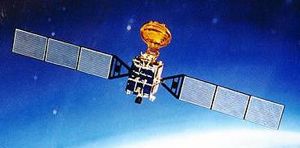
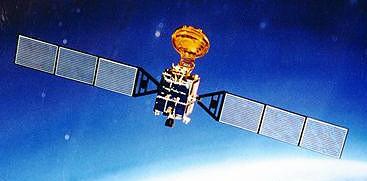
On-orbit mass was over one metric ton. The box-shaped satellite was equipped with two large solar panels and was 3-axis stabilized. The communications payload could consist of up to 24 6/4 GHz transponders and the design life was eight years.
The satellite was equipped with an FY-25 liquid propellant motor for apogee insertion and stationkeeping. The motor was rated for 1800 seconds total firing time. Technical assistance in overall system design and implementation was provided by MBB of Germany under a special contract. In August 2001 it was announced that China's first direct TV broadcasting satellite would be launched by 2004, and that it would use the DFH-3 bus. Three versions of the DFH-3 were developed over the years:
DFH-3 Bus
The DFH-3 was a 3-axis stabilized geosynchronous communications satellite bus. It could also be adapted for use in navigation satellites and deep space probes. It had a hexahedral structure, broken into three modules: propulsion, service and communication, communication antennas and solar arrays. There were seven subsystems: structure, control, power supply, TT&C, propulsion, thermal control and communication.
Technical Specifications
Dimensions: 2.20 m × 1.72 m × 2.00 mFirst Flights: Communications: DFH-3(1997), Navigation: Beidou Navigation Satellites(2000,2003), Deep Space: Chang'e-1(2007)
Mass: 2320 kg
Payload capacity: 230 kg
Orbit type: GEO
Antenna pointing error: Pitch, Roll <=0.15 deg (3 sigma); Yaw <=0.5 deg (3 sigma)
Station keeping precision: +-0.1 deg (3 sigma)
Solar array output: 1700 W (EOL)
Payload power consumption: 1000 W
Lifetime: 8 years
DFH-3A Bus
DFH-3A was an updated version of DFH-3 bus, which boosted payload from 230 to 360 kg and payload power from 1000 W to 2500 W.
Technical Specifications
Dimensions: 2.40 m × 1.72 m × 2.20 mDFH-3B Bus
Mass: 2740 kg
Payload bearing capacity: 360 kg
Orbit type:GEO and other orbits
Antenna pointing error: Pitch ,Roll <= 0.15 deg (3 sigma); Yaw <= 0.5 deg (3 sigma)
Station keeping precision: +- 0.1 deg (3 sigma)
Solar array output: 4000 W
Payload power consumption: 2500 W
Lifetime: 12 years
Applications: communications and navigation satellites; could be adapted for deep space probes.
First flight: Beidou navigation satellite (2007)
DFH-3B was further uprated version of the DFH-3 bus, with payload increased to 450 kg and payload power to 4000 W. Development began in 2008.
Technical Specifications<
> Dimensions:2.20 m × 2.00 m × 3.10 m
Mass: 3800 kg
Payload bearing capacity: 400-450 kg
Orbit type: GEO and other orbits
Antenna pointing error: Pitch ,Roll <= 0.06 deg (3 sigma); Yaw <= 0.2 deg (3 sigma)
Station keeping precision: +- 0.05 deg (3 sigma)
Solar array output: 5500 W
Payload power consumption: 3000 W-4000 W
Lifetime: 12-15 years
More at: DFH-3.
Subtopics
 FH-1 Chinese military communications satellite. 2 launches, 2000.01.25 (Zhongxing-22) to 2006.09.12 (Zhongxing 22A). In May 1999 Aviation Week reported that a new communication satellite, Fenghuo-1 (FH-1), would be launched by a CZ-3A by the end of 1999. Communication satellite built by CAST for People's Liberation Army (PLA), China. Launched 2000 - 2006. Used the DFH-3 Bus bus.
- BD 1A, 1B, 1C, 1D Navigation satellite built by CAST, China. Launched 2000 - 2007. Used the DFH-3 Bus bus.
- Beidou Chinese navigation satellite. Operational, first launch 2000.10.30. Beidou ('Big Dipper') was the satellite component of an independent Chinese satellite navigation and positioning system.
- BD-2 M / BD-2 I Null
- Chang'e 1 (CE 1) Null
- TL 1A, 1B, 1C, 1D Communication satellite built by CAST, China. Launched 2008 - 2016. Used the DFH-3 Bus bus.
- Chang'e 2 (CE 2) Null
 Chang'e-5 RRFV Reentry vehicle portion of Chang'e-5. The craft made an 8-day flight to loop around the Moon and return to Earth. The reentry vehicle separated from the main bus at 21:53 GMT and landed north of Hohhot at 22:42 GMT. Technology satellite built by CAST, China. Launched 2014. Used the DFH-3A Bus bus.
- BD-3 G Navigation satellite built by CAST, China. Used the DFH-3B Bus bus.
Related
- Family
- Communications, Geosynchronous orbit, Military communications sat, Moon, Navigation, Technology
- Country
- China
- Engines
- FY-25
- Launch Vehicles
- Chang Zheng 3A, Chang Zheng 3C
- Projects
- Chinastar
- Launch Sites
- Xichang, Xichang LC2, Xichang LC1
Photo Gallery
DFH-3
Credit: via Chen Lan
DFH-3
Credit: © Mark Wade
Beidou 1A
Credit: Manufacturer Image
Beidou G5
Credit: Manufacturer Image
BD-3 G
Credit: Manufacturer Image
Chang'e-5 RRFV
Credit: Manufacturer Image
Chang'e 1
Credit: Manufacturer Image
Chang'e 2
Credit: Manufacturer Image
Zhongxing-6
Credit: Manufacturer Image
Sinosat 3
Credit: Manufacturer Image
Chinasat 20A
Credit: Manufacturer Image
Tianlian 1-03
Credit: Manufacturer Image


Chronology
20 events
1994 February 8
08:34 GMT - . Launch Site: Xichang. Launch Complex: Xichang LC2. LV Family: CZ. Launch Vehicle: Chang Zheng 3A.- KF-1 - . Payload: Kua Fu 1 / DFH-3 mockup. Mass: 2,200 kg (4,800 lb). Nation: China. Agency: CASC. Program: Chinastar. Class: Technology. Type: Navigation technology satellite. Spacecraft: DFH-3. Decay Date: 2002-02-07 . USAF Sat Cat: 23009 . COSPAR: 1994-010B. Apogee: 36,046 km (22,397 mi). Perigee: 178 km (110 mi). Inclination: 28.50 deg. Period: 635.69 min. Mass model of DFH-3 satellite..
1994 November 29
17:02 GMT - . Launch Site: Xichang. Launch Complex: Xichang LC2. LV Family: CZ. Launch Vehicle: Chang Zheng 3A.- Zhongxing 5 - .
Payload: Chinasat 5. Mass: 2,230 kg (4,910 lb). Nation: China.
Agency: Chinasat.
Program: Chinasat.
Class: Communications.
Type: Military communications satellite. Spacecraft: DFH-3.
Completed Operations Date: 1994-12-01 . USAF Sat Cat: 23415 . COSPAR: 1994-080A. Apogee: 35,957 km (22,342 mi). Perigee: 35,225 km (21,887 mi). Inclination: 0.15 deg. Period: 1,426.15 min.
The first test launch of a DFH-3 by a CZ-3A launch vehicle was successful in attaining the proper transfer orbit, but during the subsequent manoeuvres to achieve geostationary orbit, the DFH-3 failed due to a malfunction of the satellite on-board propulsion system. The satellite was positioned at 132 deg E prior to the failure. As of 4 September 2001 located at 113.80 deg E drifting at 2.499 deg E per day. As of 2007 Mar 2 located at 90.02E drifting at 2.513E degrees per day.
1997 May 11
16:17 GMT - . Launch Site: Xichang. Launch Complex: Xichang LC2. LV Family: CZ. Launch Vehicle: Chang Zheng 3A.- Zhongxing 6 - .
Payload: Chinasat 6. Mass: 2,200 kg (4,800 lb). Nation: China.
Agency: Chinasat.
Program: Chinasat.
Class: Communications.
Type: Military communications satellite. Spacecraft: DFH-3.
USAF Sat Cat: 24798 . COSPAR: 1997-021A. Apogee: 35,797 km (22,243 mi). Perigee: 35,776 km (22,230 mi). Inclination: 0.00 deg. Period: 1,436.10 min.
The telecommunications satellite, the most sophisticated and complex satellite ever built in China, was equipped with 24 transponders used for television, digital transmission and other telecommunications services. It had a design life eight years. After over one year of tests the satellite was delivered to the end user, China Telecommunications Broadcast Satellite Corporation (Chinasat) on August 12 1998. A long term operation contract for the redesignated Chinasat-6 was signed by the China Academy of Space Technology (CAST), Chinasat and the Xian Satellite Control Center. Chinasat-6 operated in geosynchronous orbit at 125 deg E in 1997-1999. As of 5 September 2001 located at 124.99 deg E drifting at 0.011 deg W per day. As of 2007 Mar 6 located at 123.93E drifting at 0.104W degrees per day.
2000 January 25
16:45 GMT - . Launch Site: Xichang. Launch Complex: Xichang LC2. LV Family: CZ. Launch Vehicle: Chang Zheng 3A.- Zhongxing 22 - .
Payload: Chinasat 7 / Feng Huo 1-1. Mass: 2,300 kg (5,000 lb). Nation: China.
Agency: SISE.
Manufacturer: CAST.
Program: Chinasat.
Class: Communications.
Type: Military communications satellite. Spacecraft: DFH-3.
USAF Sat Cat: 26058 . COSPAR: 2000-003A. Apogee: 35,794 km (22,241 mi). Perigee: 35,781 km (22,233 mi). Inclination: 3.20 deg. Period: 1,436.10 min.
First Chinese military communications satellite. First of the Feng Huo series for secure digital data and voice tactical military communications. Stationed at 98 deg E. The first in a planned constellation of satellites to be launched through 2010. Positioned in geosynchronous orbit at 98 deg E in 2000. As of 5 September 2001 located at 98.03 deg E drifting at 0.005 deg W per day. As of 2007 Mar 10 located at 97.95E drifting at 0.009W degrees per day.
2000 October 30
Launch Site: Xichang. Launch Complex: Xichang LC2. LV Family: CZ. Launch Vehicle: Chang Zheng 3A.- Beidou 1A - .
Mass: 2,200 kg (4,800 lb). Nation: China.
Agency: CNSA.
Manufacturer: CAST.
Class: Navigation.
Type: Navigation satellite. Spacecraft: DFH-3.
USAF Sat Cat: 26599 . COSPAR: 2000-069A. Apogee: 35,805 km (22,248 mi). Perigee: 35,774 km (22,228 mi). Inclination: 2.60 deg. Period: 1,436.20 min.
China's first navigation satellite, developed by CAST/Beijing. The satellite, the first in the Beidou-1 constellation, was placed in an initial 195 x 41889 km x 25.0 deg orbit geostationary transfer orbit before entering its final geosynchornous orbit at around 05:00 GMT on November 6. Stationed at 140 deg E, still maintaining its position within 0.1 deg as of 2007. No longer in use as of 2009.
2000 December 20
Launch Site: Xichang. Launch Complex: Xichang LC2. LV Family: CZ. Launch Vehicle: Chang Zheng 3A.- Beidou 1B - .
Mass: 2,200 kg (4,800 lb). Nation: China.
Agency: CNSA.
Manufacturer: CAST.
Class: Navigation.
Type: Navigation satellite. Spacecraft: DFH-3.
USAF Sat Cat: 26643 . COSPAR: 2000-082A. Apogee: 35,821 km (22,258 mi). Perigee: 35,753 km (22,215 mi). Inclination: 0.00 deg. Period: 1,436.10 min.
Second Beidou-1 geosynchronous navigation satellite. The CZ-3A rocket's third stage put Beidou in geostationary transfer orbit at around 16:42 GMT. The Beidou satellite was based on the DFH-3 comsat and had a mass of around 2200 kg including its FY-25 solid apogee motor. On December 25 Beidou was in a 190 x 41870 km x 25.0 deg transfer orbit. The launch of this second Beidou completed the prototype two-satellite navigational system which was to provide positional information for highway, railway and marine transportation. Positioned in geosynchronous orbit at 80 deg E, still maintaining its position within 0.1 deg as of 2007. Retired after launch of the Beidou-2 geosynchronous satellites in 2010.
2003 May 24
Launch Site: Xichang. Launch Complex: Xichang LC2. LV Family: CZ. Launch Vehicle: Chang Zheng 3A.- Beidou 2A - .
Mass: 2,200 kg (4,800 lb). Nation: China.
Agency: SISE.
Class: Navigation.
Type: Navigation satellite. Spacecraft: DFH-3.
USAF Sat Cat: 27813 . COSPAR: 2003-021A. Apogee: 35,836 km (22,267 mi). Perigee: 35,760 km (22,220 mi). Inclination: 0.30 deg. Period: 1,436.70 min.
Navigation satellite, joined Beidou 1A and 1B launched in December 2000. This third satellite was considered a back-up element, Positioned at 110 deg E, still maintaining its position within 0.1 deg as of 2007. Retired after launch of the Beidou-2 geosynchronous satellites in 2010.
2003 November 14
16:01 GMT - . Launch Site: Xichang. Launch Complex: Xichang LC2. LV Family: CZ. Launch Vehicle: Chang Zheng 3A.- Zhongxing 20 - . Payload: Chinasat 20 / Shentong 1-1. Mass: 2,300 kg (5,000 lb). Nation: China. Agency: SISE. Program: Chinasat. Class: Communications. Type: Military communications satellite. Spacecraft: DFH-3. USAF Sat Cat: 28082 . COSPAR: 2003-052A. Apogee: 35,811 km (22,251 mi). Perigee: 35,762 km (22,221 mi). Inclination: 0.00 deg. Period: 1,436.10 min. Military communications satellite. First of the Shentong series operated by the Chinese Army to provide secure voice and data communications services for ground users using Ku-band. As of 2007 Mar 11 located at 103.00E drifting at 0.010W degrees per day..
2006 September 12
16:02 GMT - . Launch Site: Xichang. Launch Complex: Xichang LC2. LV Family: CZ. Launch Vehicle: Chang Zheng 3A.- Zhongxing 22A - .
Payload: Chinasat 22A / Feng Huo 1-2. Mass: 2,300 kg (5,000 lb). Nation: China.
Agency: CTBSC.
Manufacturer: CAST.
Program: Chinasat.
Class: Communications.
Type: Military communications satellite. Spacecraft: DFH-3.
USAF Sat Cat: 29398 . COSPAR: 2006-038A. Apogee: 35,817 km (22,255 mi). Perigee: 35,757 km (22,218 mi). Inclination: 0.40 deg. Period: 1,000.00 min.
Military communications satellite, launched to replace Zhongxing 22 in geosynchronous orbit at 98.0 E. Part of the Feng Huo series for secure digital data and voice tactical military communications. As of 2007 Mar 10 located at 98.10E drifting at 0.006W degrees per day.
2007 February 2
16:28 GMT - . Launch Site: Xichang. Launch Complex: Xichang LC2. LV Family: CZ. Launch Vehicle: Chang Zheng 3A.- Beidou 1D - .
Payload: DFH-3A. Mass: 2,200 kg (4,800 lb). Nation: China.
Agency: SISE.
Class: Navigation.
Type: Navigation satellite. Spacecraft: DFH-3.
USAF Sat Cat: 30323 . COSPAR: 2007-003A. Apogee: 36,248 km (22,523 mi). Perigee: 35,326 km (21,950 mi). Inclination: 6.20 deg. Period: 1,436.10 min.
Navigation satellite. It did not reach geostationary orbit until early April following deployment problems with its solar panels and reports of US detection of a debris cloud at the time of the original expected apogee firing. As of 2010 reported to have suffered a control failure.
2007 May 31
16:08 GMT - . Launch Site: Xichang. LV Family: CZ. Launch Vehicle: Chang Zheng 3A.- Sinosat 3 - . Mass: 2,200 kg (4,800 lb). Nation: China. Agency: SinoSatCom. Manufacturer: CAST. Program: Sinosat. Class: Communications. Type: Civilian communications satellite. Spacecraft: DFH-3. USAF Sat Cat: 31577 . COSPAR: 2007-021A. Apogee: 35,793 km (22,240 mi). Perigee: 35,779 km (22,231 mi). Inclination: 0.30 deg. Period: 1,436.10 min. Chinese C-band domestic communications satellite, launched as part of a campaign to prepare for the 2008 Olympic Games, and to compensate for failure of the first DFH-4 satellite..
2007 October 24
10:05 GMT - . Launch Site: Xichang. Launch Complex: Xichang LC1. Launch Pad: LC3. LV Family: CZ. Launch Vehicle: Chang Zheng 3A.- Chang'e 1 - .
Mass: 2,300 kg (5,000 lb). Nation: China.
Agency: SISE.
Class: Moon.
Type: Lunar probe. Spacecraft: DFH-3.
Decay Date: 2008-01-28 . USAF Sat Cat: 32273 . COSPAR: 2007-051B. Apogee: 50,182 km (31,181 mi). Perigee: 147 km (91 mi). Inclination: 30.80 deg. Period: 929.20 min.
China's first unmanned lunar/planetary probe. The initial orbit of 221 x 50,602 km x 31.0 deg was raised to a translunar trajectory by 31 October in a serious of spacecraft engine burns. The spacecraft entered a 210 km x 8600 km lunar orbit at 03:37 GMT on 5 November.
2010 October 1
11:00 GMT - . Launch Site: Xichang. LV Family: CZ. Launch Vehicle: Chang Zheng 3C.- Chang'e 2 - .
Mass: 2,480 kg (5,460 lb). Nation: China.
Agency: SISE.
Class: Moon.
Type: Lunar probe. Spacecraft: DFH-3.
USAF Sat Cat: 37174 . COSPAR: 2010-050A.
China's second lunar orbiter, retasked to an interplanetary explorer. Entered a 119 x 8599 km lunar orbit on 1 October at 03:14 GMT. By 9 October it had maneuvered to its operational 100-km circular lunar orbit. On 9 June 2011, its lunar mission complete, it was maneuvered out of lunar orbit, and arrived at the Sun-Earth L2 Lagrangian point on 25 August 2011. It then followed the interplanetary gravitational superhighway to a 1.02 AU x 1.03 AU x 0.2 deg solar orbit, leading to a flyby of the asteroid Toutatis on 13 December 2012 at 08:30 GMT. It came within 3.2 km of the planetoid and returned detailed images.
2010 November 24
16:09 GMT - . Launch Site: Xichang. LV Family: CZ. Launch Vehicle: Chang Zheng 3A.- Zhongxing 20A - . Payload: Chinasat 20A / Shentong 1-2. Mass: 2,300 kg (5,000 lb). Nation: China. Program: Chinasat. Class: Communications. Type: Military communications satellite. Spacecraft: DFH-3. USAF Sat Cat: 37234 . COSPAR: 2010-064A. Apogee: 35,795 km (22,241 mi). Perigee: 35,778 km (22,231 mi). Inclination: 0.40 deg. Period: 1,436.10 min. Second of the Shentong series operated by the Chinese Army to provide secure voice and data communications services for ground users using Ku-band..
2011 July 11
15:41 GMT - . Launch Site: Xichang. LV Family: CZ. Launch Vehicle: Chang Zheng 3C.- Tianlian 1-02 - . Mass: 2,300 kg (5,000 lb). Nation: China. Class: Communications. Type: Military communications satellite. Spacecraft: DFH-3. USAF Sat Cat: 37737 . COSPAR: 2011-032A. Apogee: 35,804 km (22,247 mi). Perigee: 35,769 km (22,225 mi). Inclination: 0.80 deg. Period: 1,436.10 min. Data relay satellite to support the Shenzhou-Tiangong docking mission and later manned space station missions..
2012 July 25
15:43 GMT - . Launch Site: Xichang. LV Family: CZ. Launch Vehicle: Chang Zheng 3C.- Tianlian 1-03 - . Mass: 2,300 kg (5,000 lb). Nation: China. Class: Communications. Type: Military communications satellite. Spacecraft: DFH-3. USAF Sat Cat: 38730 . COSPAR: 2012-040A. Apogee: 35,802 km (22,246 mi). Perigee: 35,771 km (22,227 mi). Inclination: 1.90 deg. Period: 1,436.10 min. Provided communications relay to the Chinese space station. On station at 16.7 deg E by 6 August..
2014 October 23
18:00 GMT - . Launch Site: Xichang. LV Family: CZ. Launch Vehicle: Chang Zheng 3C/G2.- Chang'e-5 RRFV - . Payload: CHANG E 5-T1. Nation: China. Class: Moon. Type: Lunar probe. Spacecraft Bus: DFH-3. Spacecraft: Chang'e-5 RRFV. Decay Date: 2014-10-31 . USAF Sat Cat: 40283 . COSPAR: 2014-065A. Apogee: 404,729 km (251,486 mi). Perigee: -1,281 km (-1,281 mi). Inclination: 30.50 deg. Reentry vehicle portion of Chang'e-5. The craft made an 8-day flight to loop around the Moon and return to Earth. The reentry vehicle separated from the main bus at 21:53 GMT and landed north of Hohhot at 22:42 GMT..
2015 November 20
16:07 GMT - . Launch Site: Xichang. Launch Complex: Xichang LC2. LV Family: CZ. Launch Vehicle: Chang Zheng 3B.- LaoSat 1 - .
Nation: China.
Class: Communications.
Type: Communications satellite. Spacecraft: DFH-3.
USAF Sat Cat: 41034 . COSPAR: 2015-067A. Apogee: 41,778 km (25,959 mi). Perigee: 189 km (117 mi). Inclination: 18.40 deg.
Chinese-built DFH-3B communications satellite for Laos. LaoSat-1 was owned by Lao Satellite Joint Venture Co, a collab between China APMT Co. and the Lao National Authority for Science and Tech. LaoSat-1 was placed in a 189 x 41778 km x 18.4 deg geotransfer orbit. Onboard liquid thruster raised orbit to GEO at 128.5 deg E
2016 November 22
15:24 GMT - . Launch Site: Xichang. LV Family: CZ. Launch Vehicle: Chang Zheng 3C.- Tianlian-1 04 - .
Nation: China.
Class: Communications.
Type: Data relay satellite. Spacecraft: DFH-3.
USAF Sat Cat: 41869 . COSPAR: 2016-072A. Apogee: 41,776 km (25,958 mi). Perigee: 201 km (124 mi). Inclination: 17.40 deg.
The fourth in China's Tianlian-1 series of data relay satellites was launched into an elliptical geotransfer orbit. On Nov 23 at about 1000 UTC it raised its orbit with a burn over the Indian Ocean. It wa expected to replace Tianlian-1 01 at the 80E location. On Dec 1 Tianlian 1-04 was tracked on station at 76.9E, a few degrees from Tianlian 1-01.
2017 April 12
11:04 GMT - . Launch Site: Xichang. Launch Complex: Xichang LC2. LV Family: CZ. Launch Vehicle: Chang Zheng 3B.- Shi Jian 13 - .
Payload: Chinasat 16. Nation: China.
Class: Communications.
Type: Communications satellite. Spacecraft: DFH-3.
USAF Sat Cat: 42662 . COSPAR: 2017-018A. Apogee: 41,743 km (25,937 mi). Perigee: 237 km (147 mi). Inclination: 21.00 deg.
See SJ 13 / ZX 16 (ChinaSat 16). China's Shi Jian 13 was launched into geotransfer orbit. The satellite was for Ka-band high bandwidth communications experiments. After its experimental phase it was to be transferred to China Satcom which would operate it as Zhongxing-16.